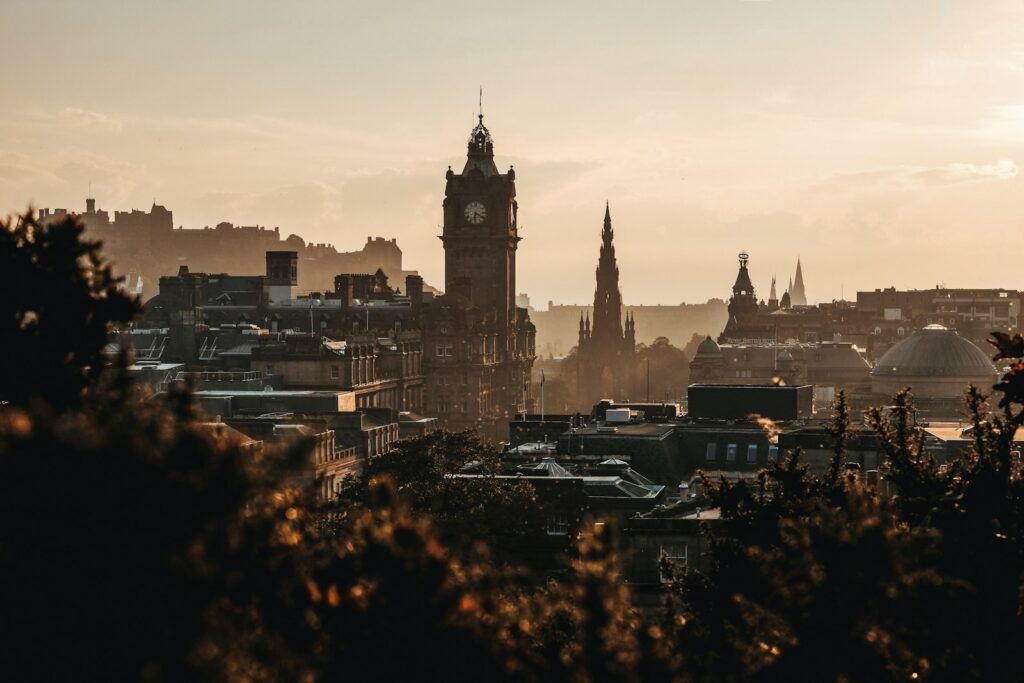
Edinburgh is a city built on a dead volcano with a medieval old town on one side of a drained loch and a Georgian grid on the other. That geography is the reason it looks the way it does, and it also explains why walking it is more tiring than the map suggests. Here is what to prioritise.
Edinburgh Castle and the Royal Mile
The castle sits on the volcanic plug and is the busiest attraction in Scotland. Book online in advance and go at opening. The Royal Mile runs downhill from it to Holyrood Palace, and the interesting parts are the closes, the narrow alleys running off it, rather than the main street itself.
Real Mary King’s Close, an underground street preserved beneath the buildings, is the best of the paid attractions along it.
Arthur’s Seat
An extinct volcano inside the city, reachable in about 45 minutes from Holyrood. This is the best thing to do in Edinburgh and it is free. Go at sunrise if you can manage it. Wear proper shoes, as the paths are rocky and get slick.
Calton Hill
A ten minute climb for the classic view back to the castle and across to the Firth of Forth. Better at sunset than Arthur’s Seat and far easier.
The New Town
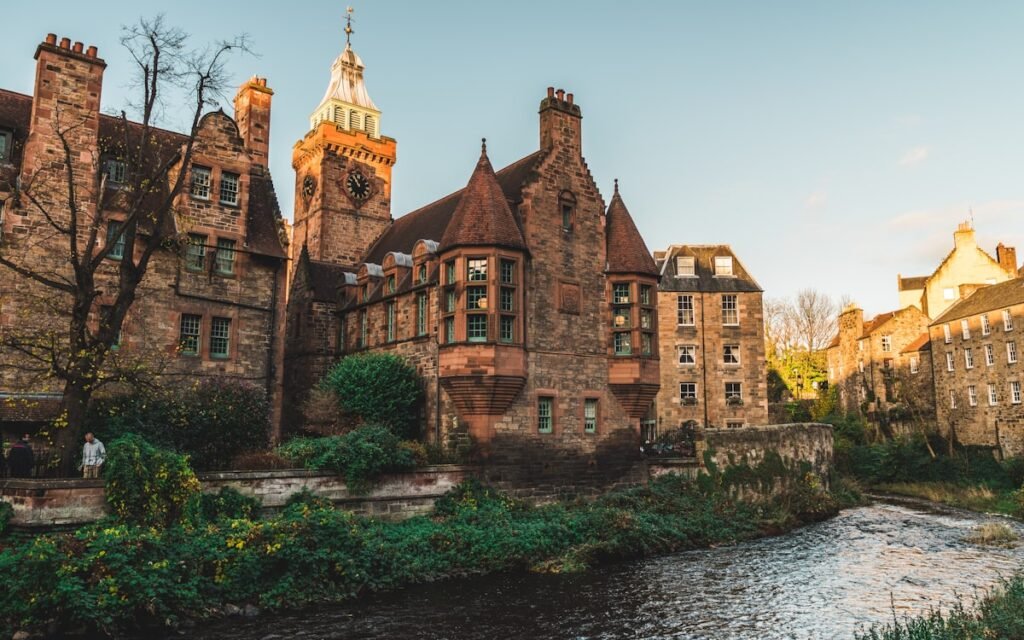
Georgian planning from the 1760s, and a UNESCO site alongside the Old Town. Walk Charlotte Square, Dean Village down on the Water of Leith, and Stockbridge on a Sunday for the market.
Dean Village is the most photographed corner of the city and it takes about fifteen minutes to reach on foot from Princes Street, which surprises people.
Museums and galleries
- National Museum of Scotland. Free, excellent, with a roof terrace most visitors miss.
- Scottish National Gallery. Free, compact, on Princes Street.
- Writers’ Museum. Free, small, tucked in a close off the Royal Mile.
Day trips
- Rosslyn Chapel. 30 minutes by bus, extraordinary stone carving.
- South Queensferry. The three Forth bridges, 25 minutes by train.
- Stirling. Castle and Wallace Monument, an hour by train.
- The Highlands. Doable as a very long day trip to Glencoe or Loch Ness, but better as an overnight.
When to go
August is the Festival and Fringe, which is extraordinary and also means the city roughly doubles in population, accommodation prices triple and everything must be booked months ahead. May, June and September are the better visits if you want the city itself.
Winter is dark by mid-afternoon but the Old Town in low light and rain is arguably when Edinburgh looks best.
Practical notes
- The city is compact and walkable, but steep. Budget more time than distances suggest.
- Trams run from the airport to the centre in about 35 minutes.
- Bring waterproofs regardless of the forecast.
- Scottish banknotes are legal tender but occasionally questioned elsewhere in the UK.
Where to stay
- Old Town. Atmospheric and central, and noisy during Festival. Best for a first short visit.
- New Town. Georgian elegance, better restaurants, quieter, walkable to everything.
- Stockbridge. Village feel, excellent for a longer stay, twenty minutes on foot from the centre.
- Leith. Waterfront, strong food scene, considerably better value. Tram and bus links to the centre.
- Bruntsfield and Marchmont. Residential, near the Meadows, popular during Festival.
Eating and drinking
Edinburgh’s food scene has improved substantially and extends well beyond the tourist offerings on the Royal Mile.
- Scottish seafood. Leith and the Shore have the best of it, particularly langoustines, scallops and oysters.
- Haggis. Worth trying properly rather than dismissing. Vegetarian versions are common and good.
- Whisky. A tasting flight teaches more than a distillery tour in the city. Ask for regional comparisons rather than a single malt.
- Traditional pubs. Sandy Bell’s and the Royal Oak for folk music, both small and genuinely local.
- Breakfast. A full Scottish includes tattie scone and black pudding.
Edinburgh with children
- Camera Obscura, which is consistently the highest-rated family attraction in the city.
- Dynamic Earth, interactive and indoors for wet days.
- Edinburgh Zoo, reachable by bus from Princes Street.
- Arthur’s Seat, manageable for most children over about seven.
- The Meadows and Princes Street Gardens for running about between sights.
How many days you need
- Two days. Castle, Royal Mile, Arthur’s Seat, New Town walk. Enough for the essentials.
- Three to four days. Adds museums, Leith, Dean Village and one day trip.
- Five or more. Allows the Highlands, Stirling or St Andrews without rushing the city.
Frequently asked questions
Is Edinburgh walkable?
Very, but steeply. The Old Town to New Town involves significant climbs and descents, and distances feel longer than the map suggests.
Should I visit during the Festival?
If you want the Fringe, yes, and book accommodation many months ahead. If you want Edinburgh itself, choose almost any other month.
Do I need a car?
No. The city is compact and parking is difficult and expensive. Hire one only for the Highlands, and collect it on the day you leave.
What is the weather like?
Changeable year-round, rarely extreme, frequently windy. Layers and a waterproof matter in every season, including summer.
For more European city breaks, see the Prague travel guide.
Pair it with the Highlands, one of the best romantic getaways in Europe for couples.