in
15 Most Interesting Places in Barcelona, Spain (2026 Travel Guide)
Barcelona suffers from the same problem as Paris: visitors who have never been expect something extraordinary, and Barcelona still manages to exceed those expectations. The city on the Mediterranean has an embarrassment of riches — the most concentrated collection of Art Nouveau architecture in the world, a Gothic Quarter that predates Columbus’s voyage to America, a food scene that shaped the modern restaurant industry, and beaches that would be the defining attraction of any other city.
But Barcelona also has a layer beneath the obvious that most visitors never reach. Hidden courtyards, modernist buildings with no queues, neighborhoods that function as genuine villages, and a Catalan identity asserting itself at every turn.
These are the most interesting places in Barcelona for travelers who want all of it.
Iconic Barcelona Landmarks Every Visitor Must See
1. Sagrada Familia – The Greatest Unfinished Building in the World
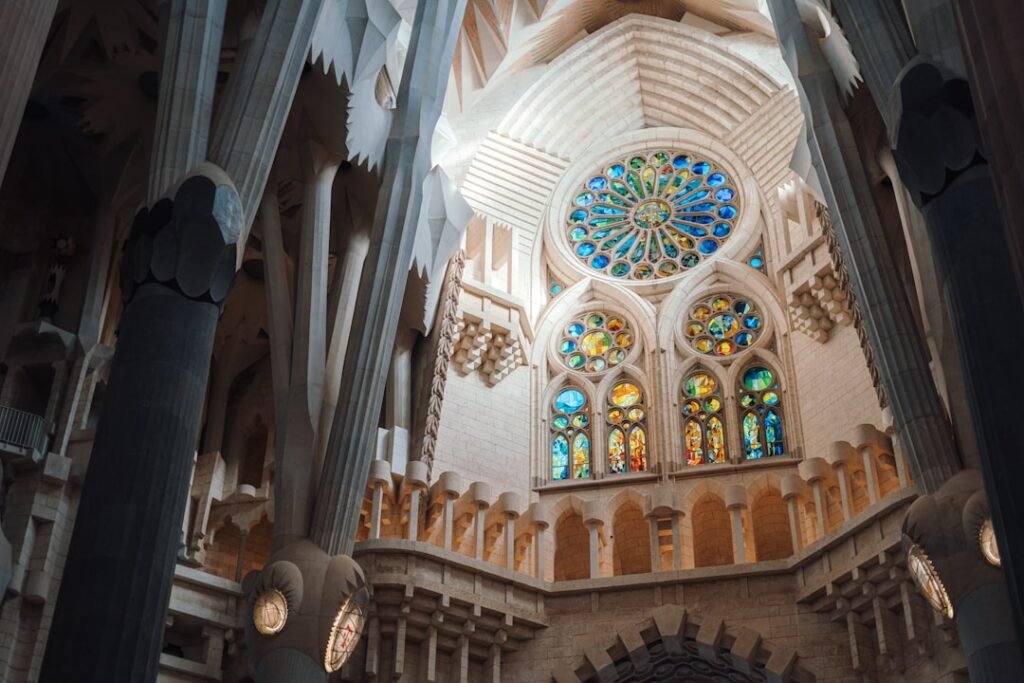
Antoni Gaudi’s masterpiece basilica, under construction since 1882 and still not complete, is one of the most extraordinary buildings in human history. The exterior stone facades — the Nativity and Passion facades — are encrusted with sculptural detail at every surface. The interior, flooded with colored light through abstract stained glass windows, achieves something no other building manages: it feels simultaneously like a forest, an ocean, and a cathedral.
Gaudi is buried in the crypt beneath the nave, and the ongoing construction follows his original vision using digital modeling of his plaster models.
Practical tip: Book tickets 2 to 3 months in advance for peak season. Include the tower access — the view from the Nativity tower spires over Barcelona is extraordinary. The interior is most spectacular on a sunny morning when the east-facing glass floods the nave with color.
Book now: Sagrada Familia fast-track entry with tower access via GetYourGuide
2. Park Guell – Gaudi’s Mosaic Hilltop Garden
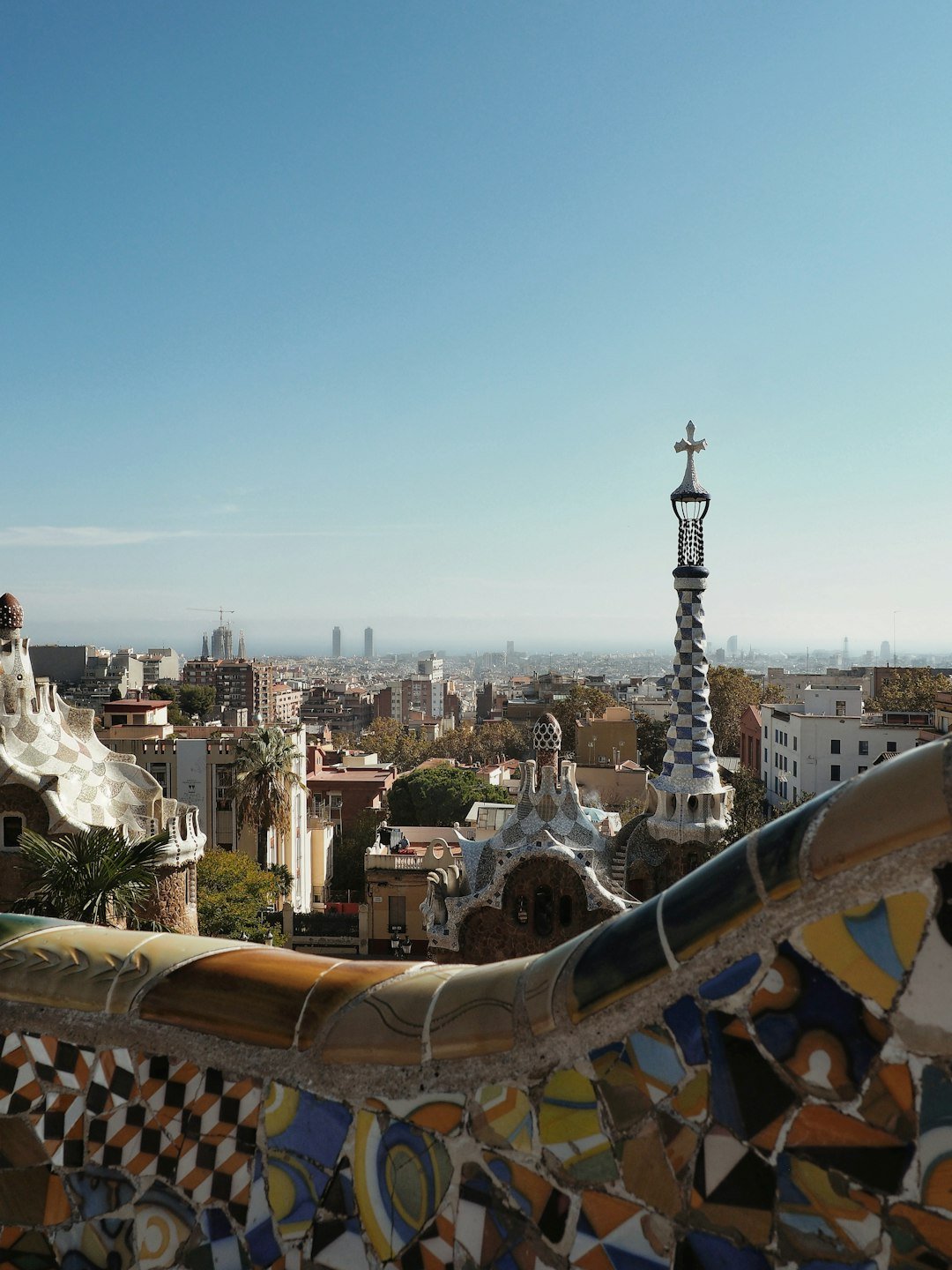
Commissioned by industrialist Eusebi Guell as a planned garden city that never materialized, Park Guell became instead Gaudi’s most playful and exuberant work. The famous mosaic dragon fountain at the entrance, the serpentine mosaic bench on the main terrace, and the forest of inclined stone columns in the hypostyle hall below represent Gaudi’s most inventive integration of architecture, landscape, and decorative art.
The hilltop location provides the best panoramic views of Barcelona and the sea.
Practical tip: The monumental zone (the ticketed area with the famous terrace) requires advance booking — entry is timed and limited. The surrounding parkland is free and also worth exploring.
Book now: Park Guell timed entry ticket via Viator
3. Gothic Quarter – 2,000 Years in a Few City Blocks
The Barri Gotic contains the most concentrated layers of history in Barcelona: Roman walls from the 1st century BC, a medieval Jewish quarter (El Call) with its 12th-century synagogue, a 14th-century Gothic cathedral, and baroque churches built over Roman temples. All of this is compressed into a neighborhood where the streets are so narrow that neighbors can almost touch across them.
Most visitors follow the main tourist streets. The real Gothic Quarter is in the smaller lanes north and west of the cathedral, where locals still live and work.
Lesser-Known Barcelona Attractions Worth Every Detour
4. Palau de la Musica Catalana – The Most Beautiful Concert Hall in Europe
Lluis Domenech i Montaner’s 1908 concert hall is the only concert hall listed as a UNESCO World Heritage Site and arguably the greatest single work of Catalan Modernisme. The auditorium interior, with its stained glass ceiling dome that floods the space with natural light, its columns of mosaic tiles, and its sculptural stage representing the meeting of Catalan folk music and Wagner, is one of the most astonishing interiors in Europe.
It is one of the most interesting places in Barcelona and receives far fewer visitors than Gaudi’s works.
Practical tip: Guided tours run daily but attending a concert is the ideal way to experience the space. Check the program in advance — even a choral concert or chamber music recital works perfectly in this setting.
Book now: Palau de la Musica Catalana guided tour via GetYourGuide
5. Casa Batllo – Gaudi’s Most Theatrical Building
While the Sagrada Familia is Gaudi’s most ambitious work, Casa Batllo on the Passeig de Gracia is his most theatrical. The facade — a riot of bone-shaped columns, ceramic scales, and colored glass — represents a dragon defeated by Sant Jordi (St. George). Inside, the building flows like an underwater cave, with no straight lines, ceramic tile walls that shift in shade from deep blue at the base to white at the top, and a central light shaft that brings daylight to every floor.
Practical tip: The evening Gaudí Night Experience, including an AR layer and access to the rooftop terrace lit after dark, is more atmospheric than the standard daytime visit.
6. El Born – Barcelona’s Most Stylish Neighborhood
The El Born neighborhood around the Basílica de Santa Maria del Mar is Barcelona at its most stylish and livable: independent boutiques, excellent cocktail bars, the 19th-century iron Mercat de Santa Caterina, and the remains of an entire 1714 neighborhood preserved in glass beneath the El Born Cultural Centre.
Santa Maria del Mar itself — a 14th-century Gothic church built entirely by the citizens of the Born neighborhood — is the most beautiful and most atmospheric church in Barcelona. Less visited than the cathedral, far more perfect.
7. Montjuic – The Hill With Everything
The hill of Montjuic rising above the port contains more attractions than most cities: the Fundacio Joan Miro with the largest collection of the artist’s work in the world, the MNAC (National Art Museum of Catalonia) with its extraordinary Romanesque collection, the Poble Espanyol open-air architecture museum, the 1992 Olympic stadium and diving pool, and a 17th-century castle with views across the entire city and coastline.
The cable car from Barceloneta beach to the castle summit is one of the great Barcelona experiences.
Hidden Gems in Barcelona Only the Curious Find
8. Gracia – The Village Inside the City
The neighborhood of Gracia was an independent municipality absorbed into Barcelona in 1897, and it has never quite accepted the annexation. Its residents have a fierce local identity, its plazas (Virreina, Sol, Diamant) function as genuine community living rooms, and its streets have more independent bookshops, coffee roasters, and natural wine bars per capita than anywhere else in the city.
The Gracia Festival in August, when residents spend months decorating the neighborhood streets in elaborate themes, is one of the most extraordinary community events in Spain.
9. Bunkers del Carmel – The Best Free View in Barcelona
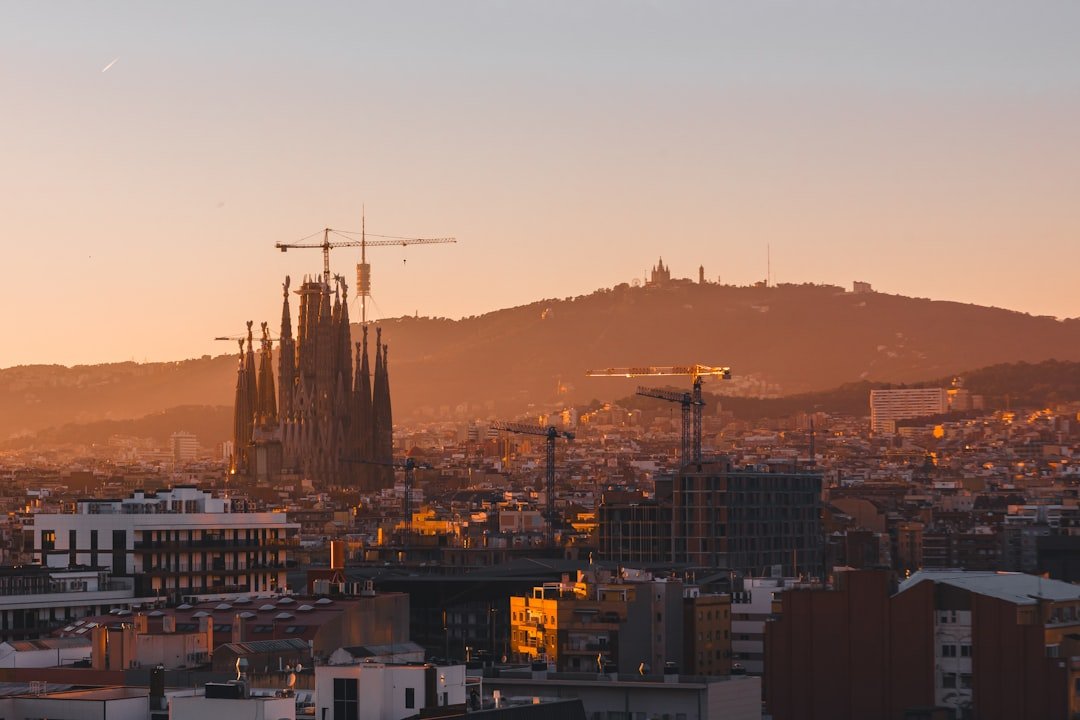
The anti-aircraft bunkers on the hilltop of the Turó de la Rovira in the Carmel neighborhood offer the most complete panoramic view of Barcelona available anywhere. Unlike the paid Tibidabo or cable car viewpoints, this is entirely free and accessible by a 20-minute walk or taxi from the nearest metro station.
Barcelona laid out below from the Sagrada Familia spires to the sea, with the coastal mountains behind — it is the photograph that every visitor wants and very few find.
Practical tip: Arrive 45 minutes before sunset, stay for the blue hour. Bring a bottle of cava — the unofficial tradition here.
10. Recinte Modernista de Sant Pau – Gaudi’s Rival’s Masterpiece
Just 400 meters from the Sagrada Familia, the former Hospital de Sant Pau is a UNESCO World Heritage Site and the most complete surviving work of Lluis Domenech i Montaner. The complex of 12 Art Nouveau pavilions set in gardens, each one encrusted with ceramic mosaics, stained glass, and sculpture, is widely considered the rival of any Gaudi work in Barcelona — and receives a fraction of the visitors.
Practical tip: Entry is 22 euros and queues are minimal. Combine with the Sagrada Familia on the same morning — they are within easy walking distance.
11. Barceloneta and the Coastal Path – Mediterranean Life
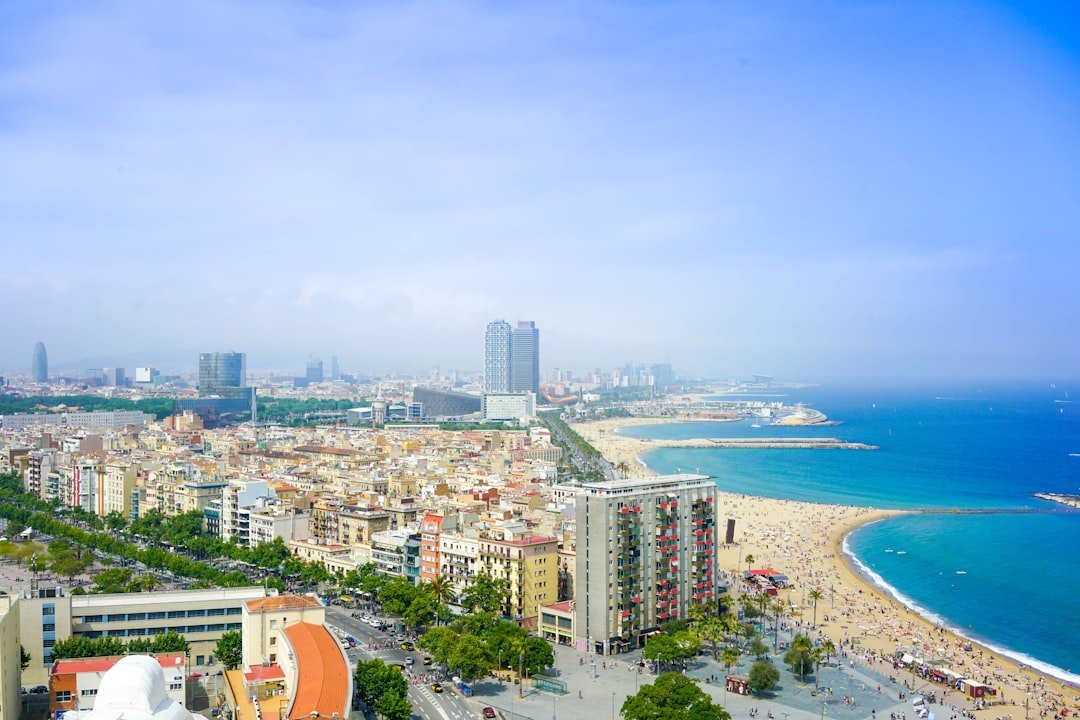
The Barceloneta neighborhood was built in the 18th century to house the fishing community displaced by the construction of the Ciutadella citadel. Its narrow grid of streets, traditional seafood restaurants (chiringuitos), and direct access to the beach give it an atmosphere that predates Barcelona’s transformation into a tourist city.
The coastal path north of Barceloneta runs for kilometers past the Port Olimpic, through the Diagonal Mar neighborhood, to the Besos river — a long walk that shows Barcelona’s evolution from fishing village to Olympic city to 21st-century waterfront.
12. Mercat de Santa Caterina – The Market Nobody Visits
While La Boqueria on the Rambla has become largely a tourist spectacle, the Mercat de Santa Caterina in El Born is a genuine working market where Barcelona’s chefs and residents shop. The market building itself is spectacular — its undulating ceramic roof by Enric Miralles is one of the finest pieces of contemporary architecture in Barcelona.
Practical tip: Visit between 8 and 10 AM on a weekday to see it operating at full speed as a local market.
13. Tibidabo – The Amusement Park on the Mountain
The Tibidabo amusement park at the summit of the Collserola mountain above Barcelona has been operating since 1901, making it one of the oldest funfairs in the world. Vintage rides — the airplane, the haunted mansion, the carousel — operate alongside more modern attractions at 512 meters, with Barcelona spread out below. The Neo-Gothic church of the Sagrat Cor on the adjacent peak adds to the surreal skyline.
The ride up on the historic blue tram (Tramvia Blau) and funicular railway is half the experience.
14. Pedralbes Monastery – Medieval Silence in the City
Founded in 1326 by Queen Elisenda of Montcada, the Monastery of Pedralbes in the upper part of the city is one of the best-preserved Gothic monasteries in Europe. Its three-story Gothic cloister, containing a garden of orange trees and a 14th-century chapel covered in murals by Ferrer Bassa, is one of the most peaceful places in Barcelona.
Entry is 7 euros and the monastery is rarely crowded. It feels entirely removed from the city a few minutes away.
15. El Poblenou – Barcelona’s Industrial Reinvention
The former industrial neighborhood of Poblenou along the coast is Barcelona’s most interesting ongoing transformation: textile factories converted into design studios, old warehouses housing restaurants, street art covering the remaining blank walls, and the Rambla del Poblenou — a genuine neighborhood promenade entirely unlike the tourist version on La Rambla.
The @22 tech and design district embedded within Poblenou has made it home to some of Barcelona’s most interesting new architecture alongside its surviving industrial heritage.
Practical Barcelona Travel Tips
Best time to visit Barcelona: May to June and September to October are ideal — warm, sunny, and with manageable crowds. July and August are extremely hot and crowded, though the beach culture is at its peak. March and April offer good weather and lower prices.
Getting around: Barcelona’s metro network covers all major attractions efficiently. The T-Casual card (10 trips) covers metro, bus, and tram and is significantly cheaper than single tickets. The city is also very walkable — the Gothic Quarter, El Born, and the Example are all best explored on foot.
T-10 Tip: A single metro journey is 2.55 euros. The T-Casual 10-trip card costs 11.35 euros — always buy the card rather than single tickets.
Pickpockets: Barcelona has significant pickpocket activity around La Rambla, the Gothic Quarter, and on the metro. Keep bags in front, phones in pockets, and wallets in inside jacket pockets in crowded areas.
Final Thoughts on Interesting Places in Barcelona
Barcelona is a city that gives generously to everyone — the beach lovers, the architecture obsessives, the food fanatics, the night owls, and the quiet seekers who find the monastery cloister on a Tuesday morning with the building to themselves.
The city’s greatest quality is its livability. Sit in a plaza in Gracia on a warm evening, drink cava with strangers, and you will understand immediately why so many people who visit Barcelona come back to stay.
Exploring Europe? Read our complete guides to Interesting Places in Paris, Interesting Places in Rome, and Interesting Places in Bali.