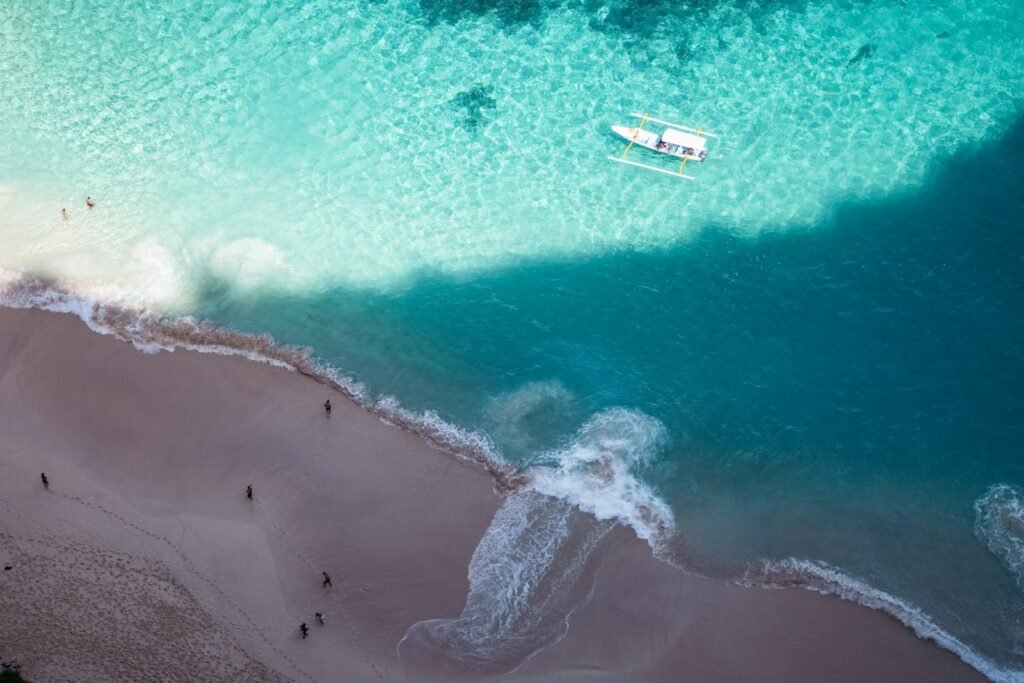
Most beach rankings are ranked by photograph. That is why so many people arrive at a famous beach to find a car park, a row of loungers and a swell that makes swimming unpleasant. These are the beaches and coastlines that hold up in person, sorted by what you actually want from a beach.
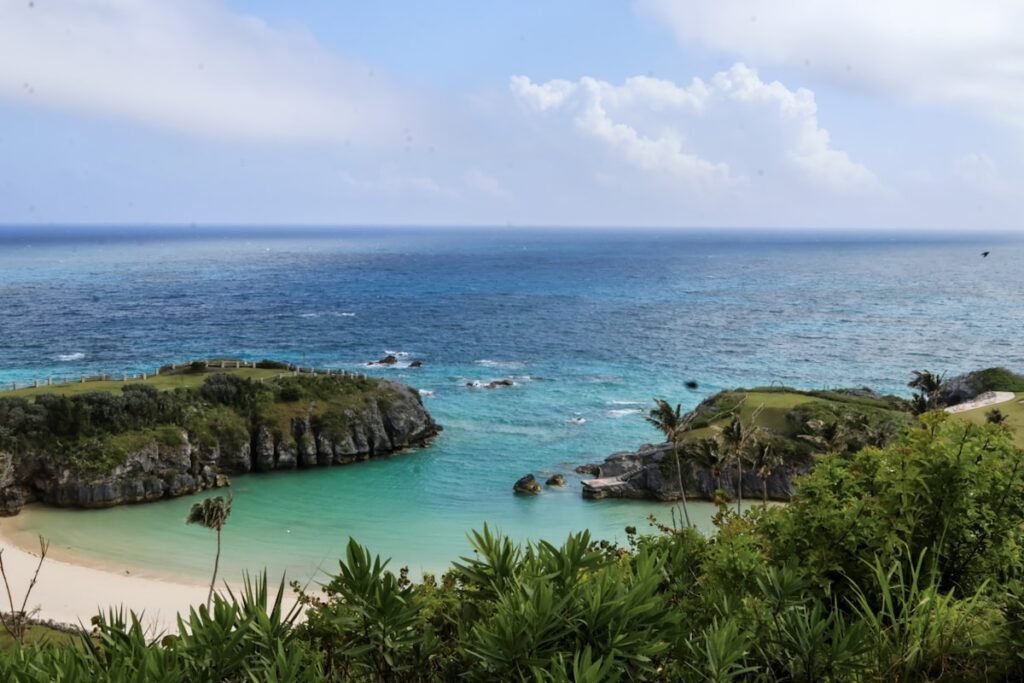
For water clarity
Grace Bay, Turks and Caicos
A long shelf of white sand with almost no rock, no seaweed and water that stays waist deep a long way out. Reliably calm, which is rare.
Whitehaven Beach, Australia
Seven kilometres of silica sand so fine it squeaks. The Hill Inlet swirl at the northern end is the shot everyone knows. Day trips from Airlie Beach or Hamilton Island.
Anse Source d’Argent, Seychelles
Granite boulders on shallow turquoise water. Shallow enough that swimming is limited, which is the tradeoff for the scenery.
For drama
Reynisfjara, Iceland
Black volcanic sand, basalt columns and sea stacks. Not a swimming beach under any circumstances. Sneaker waves here are genuinely dangerous and have killed visitors, so stay well back from the waterline.
Navagio, Zakynthos
A shipwreck on white sand inside vertical limestone cliffs, reachable only by boat. Go early, as the cove fills with boats by mid-morning.
Praia da Marinha, Portugal
The best of the Algarve’s cliff beaches. Walk the clifftop path either side for the arches and sea caves.
For long empty coastline
The Wild Atlantic Way, Ireland
Not one beach but 2,500km of coast. Keem Bay on Achill Island and the Dingle peninsula are the highlights.
Skeleton Coast, Namibia
Desert dunes meeting cold Atlantic surf, with shipwrecks in between. Beautiful in a way that is not comfortable.
Cape Cod National Seashore, USA
Sixty kilometres of protected dune and beach with minimal development.
For swimming and staying put
Playa Norte, Isla Mujeres
Shallow, calm, west-facing for sunset, walkable to food and drink.
Radhanagar Beach, Andaman Islands
Wide, calm, backed by forest rather than hotels.
Elafonissi, Crete
Pink-tinged sand and a shallow lagoon that suits families. Very busy in August.
Choosing well
- Check the season, not the destination. Most tropical beaches have a wet and a dry season, and the difference is drastic.
- Sargassum affects the Caribbean. Seaweed influx varies year to year and peaks roughly April to August.
- Famous beaches need early starts. Almost every beach on this list is transformed by arriving before 9am.
- Check surf conditions. Beauty and swimmability are frequently unrelated.
Best time to visit each region
Getting the season right matters more than getting the beach right, since the same stretch of sand can be idyllic or unswimmable depending on the month.
- Caribbean. December to April is dry season. Hurricane season runs roughly June to November, peaking in September.
- Mexico’s Pacific and Riviera Maya. November to April. Sargassum seaweed typically worst April to August on the Caribbean side.
- Mediterranean. June to September for swimming, with May and October quieter and still warm in the south.
- Southeast Asia. Monsoon timing varies by coast. Thailand’s Andaman side is best November to April, the Gulf side June to September.
- Australia’s Whitsundays. May to October. Stinger season runs roughly November to May, requiring suits.
- Seychelles and Maldives. December to April is driest.
- Northern Europe. July and August, and the water is cold regardless.
Beach safety worth taking seriously
The most beautiful beaches are frequently the least safe, because the features that make them dramatic are the same ones that generate hazards.
- Rip currents. The main cause of beach drownings worldwide. If caught, swim parallel to shore rather than against the current, and signal for help.
- Sneaker waves. Particularly at Reynisfjara in Iceland and on exposed Atlantic coasts. Never turn your back on the water and stay well up the beach.
- Marine stingers. Box jellyfish in northern Australia during summer months. Swim in netted areas and wear a suit.
- Unpatrolled beaches. Many remote beaches have no lifeguard and no phone signal. Assess honestly before swimming.
- Sun. Reflected UV off white sand and water is considerably stronger than inland. Use reef-safe sunscreen, which is legally required in several destinations.
Beaches that are better than their reputation
- Praia do Camilo, Portugal. Quieter than Marinha with the same cliff geology.
- Cala Goloritzé, Sardinia. A hike or boat ride keeps numbers down.
- Nacpan Beach, Palawan. Four kilometres of sand with minimal development.
- Diani Beach, Kenya. White sand and warm Indian Ocean, easily combined with safari.
- Playa Blanca, Colombia. Better reached as an overnight than a day trip.
Making a beach day work
- Arrive before 9am at any famous beach. Crowds, parking and light all improve dramatically.
- Check tide times on east-facing tropical coasts, where low tide can put the water hundreds of metres away.
- Bring shade. Many of the most photogenic beaches have no natural shelter at all.
- Carry cash. Remote beaches rarely have card facilities.
- Take rubbish with you, including on beaches that already have some.
For trip inspiration, see the most beautiful countries in the world.