Updated September 2026
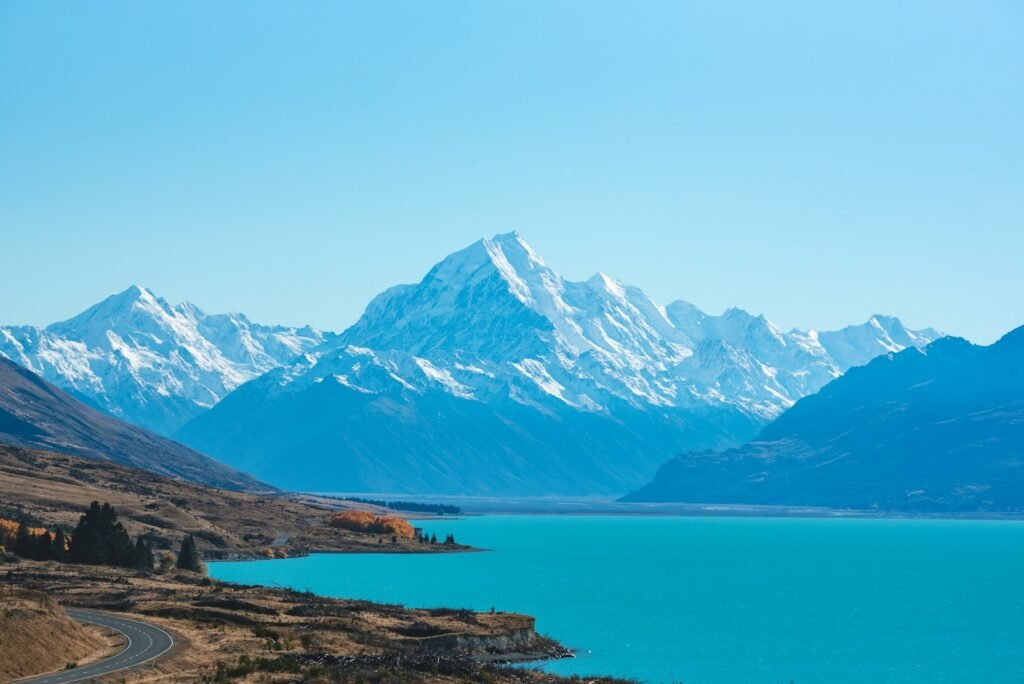
Short answer: New Zealand is the most beautiful country in the world on our 2026 ranking, followed by Norway, Switzerland, Italy and Iceland. New Zealand wins on density. Fjords, glaciers, volcanoes, alpine lakes and empty beaches all sit within a day’s drive of one another, and no other country fits that much range into so little ground.
Every list of the most beautiful countries in the world is a fight, because beauty is not one thing. Some countries are beautiful because of scale, some because of variety in a small area, and some because the landscape and the culture are inseparable. These are the ones that hold up across all three tests.
How we ranked them
We scored each country on three things. Scale: does the landscape stop you in your tracks? Density: how much variety can you see in a normal two-week trip without spending half of it in transit? Character: do the towns, food and way of life add to the scenery or fight against it? Countries that were spectacular in one corner but ordinary everywhere else dropped down the list. Cost and access did not affect the ranking, but you will find both further down.
The 12 most beautiful countries at a glance
| Rank | Country | Best for | Best time | Cost |
|---|---|---|---|---|
| 1 | New Zealand | Variety in a small area | Dec to Apr | Mid |
| 2 | Norway | Fjords and Arctic coast | Jun to Aug | High |
| 3 | Switzerland | Easy-access Alps | Jun to Sep | High |
| 4 | Italy | Landscape plus culture | May, Jun, Sep | Mid |
| 5 | Iceland | Raw volcanic scenery | Jun to Aug | High |
| 6 | Japan | Seasonal beauty | Apr, Nov | Mid |
| 7 | South Africa | Coast, mountains and wildlife | Nov to Mar (Cape) | Low |
| 8 | Scotland | Moody, empty Highlands | May, Sep | Mid |
| 9 | Peru | High Andes | May to Sep | Low |
| 10 | Canada | Sheer scale | Jun to Sep | Mid |
| 11 | Indonesia | Tropical islands and volcanoes | Apr to Oct | Low |
| 12 | Slovenia | Alps in miniature | May to Sep | Low |
1. New Zealand
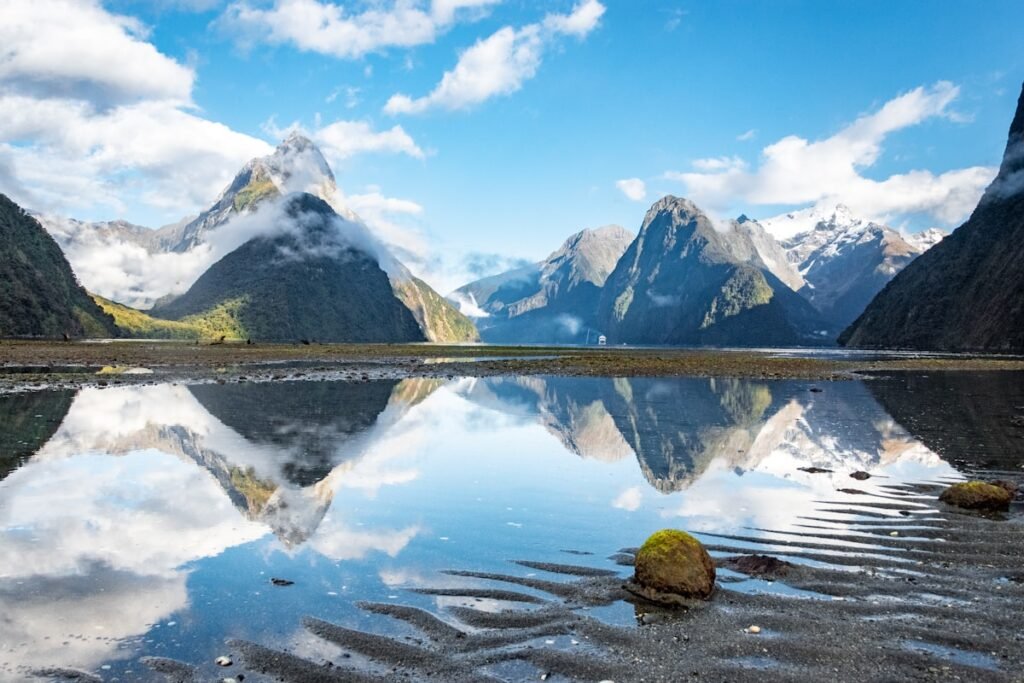
The strongest case for most beautiful country on earth, mainly because of density. Fiordland, the Southern Alps, glacier country, geothermal basins and subtropical coast all sit within a few hours’ drive of one another. Milford Sound on a wet day, which is most days, is unmatched: hundreds of temporary waterfalls pour off the cliffs after heavy rain.
What sets it apart is how little travelling the variety costs you. In one week on the South Island you can walk towards the face of a glacier on the West Coast, kayak a fjord, drive the lake road from Wanaka to Queenstown and watch the evening light on Aoraki/Mount Cook, the country’s highest peak. The North Island adds the steaming geothermal valleys around Rotorua and Taupō, the volcanic Tongariro Alpine Crossing and the long, quiet beaches of Northland.
Queenstown is busy in January, but ten minutes out of town the roads empty. The whole South Island has fewer people than many single cities, and it feels like it.
Where to go: Fiordland, Aoraki/Mount Cook, Wanaka, the West Coast glaciers, Abel Tasman and Tongariro. Our guide to the most interesting places in New Zealand goes region by region.
2. Norway
Fjords are overused as a selling point and still underdescribed. The Lofoten Islands in summer, with the sun refusing to set behind red fishing huts and vertical granite, is the single most striking coastline in Europe.
The western fjords do the same thing on a larger scale. Geirangerfjord and Nærøyfjord are both UNESCO-listed, with waterfalls dropping straight into deep water and farms clinging to ledges that were once only reachable by boat. Further north, the island of Senja has peaks that rival Lofoten with far less traffic, and above the Arctic Circle the winter months bring the northern lights.
Norway is expensive and that will not change. But the best of it, hiking, driving the National Tourist Routes and sitting on a rock above a fjord, costs nothing.
Where to go: Lofoten, Senja, Geirangerfjord, Nærøyfjord, and the classic hikes to Preikestolen (Pulpit Rock) and Trolltunga. Skip the longest drives between regions by flying.
3. Switzerland
Manicured rather than wild, which some travellers hold against it. The counterargument is the Jungfrau region and the Lauterbrunnen valley, where 72 waterfalls drop into a single glacial trough.
It is also the easiest country on this list to enjoy without effort. Trains run deep into the mountains and cable cars reach viewpoints like the Jungfraujoch or the Gornergrat above Zermatt without a single step of hiking, although walking is where Switzerland earns its place. The Matterhorn reflected in the Riffelsee on a still morning is one of the most photographed mountain views in the world for good reason.
Beyond the Bernese Oberland, the Engadin valley in the east has high lakes and larch forests that turn gold in October, and Ticino in the south brings palm trees and Italian-speaking villages to the edge of the Alps.
Where to go: Lauterbrunnen and Grindelwald, Zermatt, the Engadin and Ticino. The rail network means a car is unnecessary. See our Swiss Alps travel guide for routes and passes.
4. Italy
The country where landscape and human building are hardest to separate. The Dolomites, the Amalfi coastline, Tuscan hill towns and the lakes are each enough on their own. Italy is also proof that beauty is not only natural.
In the Dolomites, the jagged towers of the Tre Cime di Lavaredo and the meadows of the Alpe di Siusi, the largest high-altitude alpine pasture in Europe, look almost unreal in early summer. On the coast, the villages of the Amalfi Coast and Cinque Terre stack up the cliffs above clear water. Inland, the Val d’Orcia is the Tuscany of postcards: cypress lines, lone farmhouses, rolling wheat fields. Then there is Lake Como, Sicily with Etna smoking in the background, and Puglia’s white towns.
And that is before you reach a single city. Few countries let you combine a morning in the mountains with an afternoon in a Renaissance square.
Where to go: the Dolomites for mountains, Amalfi or Cinque Terre for coast, Val d’Orcia for the classic Tuscan landscape. Start with our guide to the best places to visit in Italy for the first time or go straight to the Amalfi Coast guide.
5. Iceland
Young, raw, and strange. Black beaches, active volcanic systems, glacial lagoons and highland deserts. The interior in summer looks less like scenery and more like geology in progress.
The Ring Road loops the whole island in about 1,300 km, and almost every stretch has something worth stopping for: Skógafoss and Seljalandsfoss on the south coast, icebergs drifting out of Jökulsárlón glacier lagoon, the black sand and basalt columns at Reynisfjara. The multicoloured rhyolite mountains of Landmannalaugar are only reachable in summer by 4×4 or highland bus, and the Westfjords stay quiet even in July.
One practical warning: the waves at Reynisfjara are dangerous and have killed visitors. Stay well back from the water.
Where to go: the south coast for accessibility, the Westfjords and Highlands for real emptiness. See our list of the best places to visit in Iceland and our guide to the best time to visit Iceland.
6. Japan
Beautiful seasonally rather than constantly. Cherry blossom in spring and maple in autumn transform the whole country, and the mountain temple towns like Koyasan and Nikko in mist are quieter than anything on this list.
Japan’s beauty is often small-scale and deliberate: a moss garden in Kyoto, a single maple leaning over a temple roof, a raked gravel courtyard. But it also does big landscapes. Mount Fuji seen across Lake Kawaguchi, the high valley of Kamikochi in the Japanese Alps, and the ancient cedar forest of Yakushima island are all as striking as anything in Europe.
The trick is timing. Kyoto in peak blossom week is crowded; the same city in late November, with the maples at full colour, is arguably better.
Where to go: Kyoto, the Fuji Five Lakes, Kamikochi and Takayama, Koyasan, Nikko and Yakushima. Read our guide to the best places to visit in Japan for the first time.
7. South Africa
The best variety per kilometre in Africa. Table Mountain over Cape Town, the Garden Route coastline, the Drakensberg escarpment and Kruger’s bushveld within one country’s borders.
Around Cape Town alone you can drive Chapman’s Peak, stand at Cape Point where the peninsula runs out, and spend an afternoon in the Winelands under jagged mountains. Further afield, the Cederberg’s orange sandstone and the Blyde River Canyon, one of the largest canyons in the world, show a side of the country most visitors miss.
It is also one of the few places where you can combine world-class scenery with a proper safari on the same trip, and the exchange rate makes it very good value.
Where to go: the Cape Peninsula, the Garden Route and the Drakensberg, combined with Kruger. See our Cape Town travel guide and our pick of the best safari destinations in Africa.
8. Scotland
Underrated on global lists because the weather is honest about itself. Skye, Glencoe and the northwest Highlands have a bleakness that many travellers end up preferring to prettier places.
On Skye, the Quiraing and the Old Man of Storr look like another planet in low cloud. Glencoe is best approached from the south across Rannoch Moor, where the valley suddenly closes in. The far northwest, around Assynt and Torridon, has some of the oldest rock in Europe and hardly any people, and on the Isle of Harris the beaches at Luskentyre have white sand and turquoise water that look Caribbean until you touch it.
Where to go: Skye, Glencoe, the northwest Highlands and the Outer Hebrides. Start or finish in the capital with our Edinburgh travel guide.
9. Peru
Andean peaks, the Sacred Valley, Amazon basin and the Pacific desert coast. The Cordillera Blanca around Huaraz is arguably more spectacular than the Machu Picchu route and gets a fraction of the visitors.
Huaraz sits under Huascarán, the country’s highest mountain, and day hikes like Laguna 69 reach glacier-fed lakes of an almost artificial blue. Near Cusco, the Sacred Valley’s terraces and the striped slopes of Rainbow Mountain (Vinicunca) are the famous sights. Further south, Colca Canyon near Arequipa is one of the best places in South America to watch Andean condors, and Lake Titicaca sits at nearly 3,800 metres on the Bolivian border.
Machu Picchu itself runs on timed tickets, so book well ahead, and give yourself two or three days in Cusco to adjust to the altitude first.
Where to go: the Sacred Valley and Machu Picchu, the Cordillera Blanca, Colca Canyon and Lake Titicaca. More in our guide to the most interesting places in Peru.
10. Canada
Scale is the argument. Banff and Jasper are the famous version, but the Newfoundland coast and the Yukon are where the emptiness starts to feel genuinely uncommon.
In the Rockies, Moraine Lake and Lake Louise are the postcard views, and the Icefields Parkway between Lake Louise and Jasper is one of the great mountain drives anywhere. Note that the road to Moraine Lake is closed to private cars, so you need a shuttle or tour bus. On the Atlantic side, Gros Morne National Park in Newfoundland has fjords and tablelands, and the Cabot Trail in Nova Scotia is at its best in autumn colour. On the Pacific, Tofino on Vancouver Island mixes rainforest with wild surf beaches.
Where to go: Banff, Jasper and the Icefields Parkway, Vancouver Island, Gros Morne and the Cabot Trail.
11. Indonesia
Seventeen thousand islands covering rainforest, volcanoes, rice terraces and reef. Flores, Sumba and Raja Ampat are where the real case is made, not Bali.
Sunrise over Mount Bromo on Java, with the crater steaming below, is one of the most dramatic sights in Asia. On Flores, the three crater lakes of Kelimutu change colour over the years, and Komodo National Park combines red-sand beaches, steep green islands and some of the best diving in the world. Raja Ampat, in the far east, has reefs that are among the richest in marine life anywhere.
Bali still has its moments, especially the rice terraces and the quieter north and east coasts. It just is not the whole story.
Where to go: Java’s volcanoes, Flores and Komodo, Sumba, Raja Ampat and the quieter side of Bali. See our guides to the top places in Bali and interesting places in Bali.
12. Slovenia
The best small country on the list. Alps, karst caves, a short Adriatic coast and Lake Bled, all crossable in a few hours.
The Julian Alps and Triglav National Park give you proper mountain scenery, and the Soča river running through them is a startling emerald green. Vintgar Gorge near Bled is a short boardwalk walk above rushing water, and the Škocjan Caves, a UNESCO site, have one of the largest underground canyons in the world. On the coast, the Venetian-style town of Piran sits on its own small peninsula.
Because everything is so close, you can base yourself in one or two places and still see most of it, which makes Slovenia one of the most relaxed beautiful countries to travel.
Where to go: Triglav National Park, Lake Bohinj rather than Bled if you want quiet, the Soča valley, Škocjan and Piran. Lake Bled also makes our list of the best romantic getaways in Europe.
How to choose between them
- Want maximum variety in two weeks? New Zealand or South Africa.
- Want dramatic and empty? Iceland, Norway or Scotland.
- Want landscape plus culture? Italy, Japan or Peru.
- Want it easy, with no car? Switzerland or Japan, thanks to the trains.
- Travelling on a budget? Indonesia, Peru or Slovenia go furthest.
When each is at its best
- New Zealand. December to March for summer, though autumn in April brings golden colour in Central Otago.
- Norway. June and July for midnight sun; September to March for northern lights.
- Switzerland. July to September for hiking; October for autumn colour in the Engadin.
- Italy. May, June and September, avoiding the August heat and crowds.
- Iceland. June to August for highland access; February and March for aurora with manageable daylight.
- Japan. Late March to April for blossom, November for maple.
- Scotland. May and September. Midges peak from June to August in the west.
- Peru. May to September, the Andean dry season.
- South Africa. May to September for wildlife; November to March for the Cape.
- Canada. Late June to September in the Rockies; late September to mid-October for autumn colour in the east.
- Indonesia. April to October, the drier months across most islands.
- Slovenia. May to September, with June and September the sweet spot.
Cost, roughly ranked
Beauty and expense are not correlated, which is useful to know.
- Most expensive. Switzerland, Norway, Iceland. Accommodation and food are the drivers rather than activities, most of which are free.
- Mid. New Zealand, Japan, Canada, Italy, Scotland.
- Best value. Peru, Indonesia, Slovenia and South Africa, all delivering genuinely world-class landscape at a fraction of the Nordic cost.
Slovenia in particular is the outlier here: alpine scenery comparable to Austria at Central European prices.
Travelling responsibly in fragile places
Several of these countries have seen visitor numbers rise faster than infrastructure. Iceland, New Zealand and Norway have all introduced measures in response to pressure on trails, roadside parking and small communities.
- Stay on marked paths. Moss and alpine vegetation take decades to recover from footfall.
- Camp only where permitted. Wild camping rules differ sharply between countries.
- Use local operators and stay in smaller towns, which spreads the benefit.
- Visit in shoulder season, which is better for you and for the destination.
Frequently asked questions
What is the most beautiful country in the world in 2026?
On our ranking it is New Zealand, because no other country packs fjords, glaciers, volcanoes, alpine lakes and wild coast so close together. Norway and Switzerland come next. Other lists often put Italy or Scotland first, and both are easy to defend. It depends on whether you value wild nature, variety or the mix of landscape and culture.
Is there an official ranking of the most beautiful countries?
No. Travel magazines, reader polls and tourism awards each publish their own lists, and the winner changes from year to year. The same names keep appearing near the top, though: New Zealand, Italy, Norway, Switzerland, Scotland and Iceland.
What is the most beautiful country in Europe?
For pure nature, Norway. For landscape and culture together, Italy. For the most beauty in the smallest space, Slovenia.
What is the most beautiful country in Asia?
Japan, especially in spring and autumn. For tropical scenery, volcanoes and reefs, Indonesia.
Which of the most beautiful countries is the cheapest to visit?
Peru, Indonesia, Slovenia and South Africa. All four offer world-class scenery for far less than Switzerland, Norway or Iceland.
How long do I need to see one of these countries properly?
Two weeks is a good minimum for New Zealand, Peru, Japan, Canada or Indonesia, where distances are large. Slovenia works well in a week. Switzerland, Scotland and Iceland’s south coast can be done well in seven to ten days.