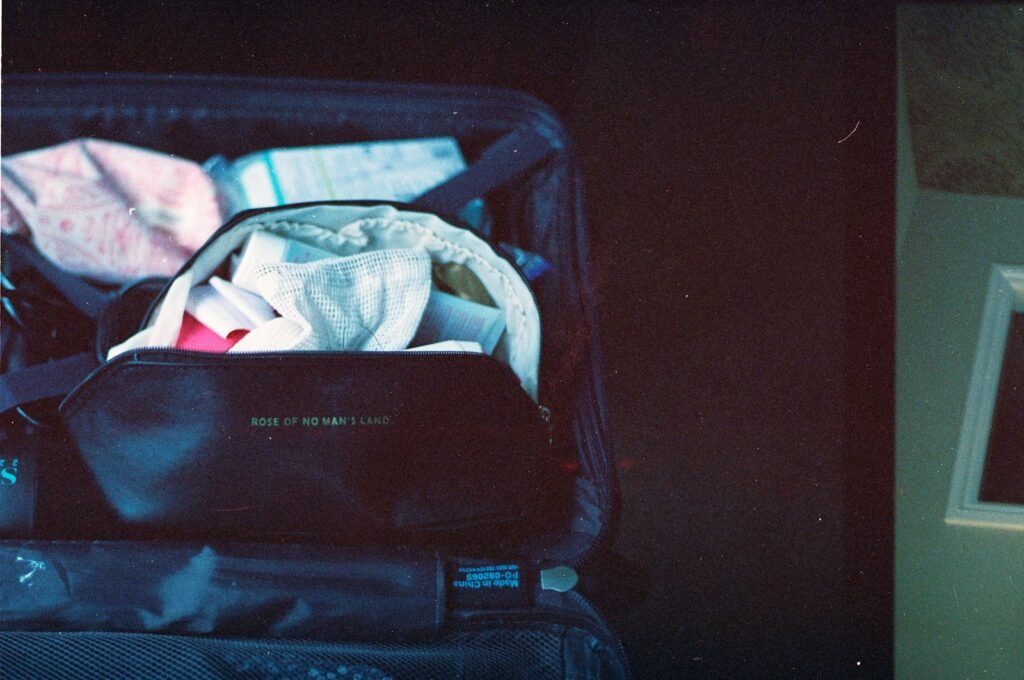
You can take liquids on a plane in containers of 3.4 ounces (100 ml) or less, and every container has to fit inside one quart-size clear bag. One bag per passenger. That limit is what the TSA calls the 3-1-1 rule, and the number that trips people up is the container size rather than how much liquid is inside it. A half-empty 8 ounce bottle of shampoo still gets taken off you, because screening goes by what is printed on the bottle.
Below is what the rule covers, the exceptions that let you carry more, and how the limits change once your bag goes in the hold.
The 3-1-1 rule in plain terms
The name is a memory aid for three separate limits that all have to be true at once.
- Each container holds 3.4 fluid ounces (100 ml) or less.
- All of those containers fit in one clear, resealable quart-size bag.
- Each passenger gets one of those bags.
Children count as passengers here, so a family of four can bring four quart bags through the checkpoint. The bag needs to close properly. If you have to squash it flat to get the seal shut, an officer can ask you to take something out.
There is no cap on how many containers go in the bag beyond what physically fits, which is usually somewhere around six to nine small bottles depending on their shape. Tall thin bottles waste less space than short wide ones.
What counts as a liquid
The category is wider than most people expect. Screening treats liquids, gels, creams, pastes, and aerosols the same way, so all of these go in the quart bag:
- Toothpaste, sunscreen, and moisturizer, because pastes and creams count
- Mascara, liquid foundation, and lip gloss
- Deodorant in stick form is fine outside the bag, but gel or spray deodorant goes in it
- Peanut butter, yogurt, honey, jam, and soft cheese, which are all spreadable enough to be treated as liquids
- Hair gel, shaving foam, and dry shampoo
Solid items are not restricted. A shampoo bar, a solid perfume, a stick deodorant, and powdered laundry detergent all travel outside the bag with no size limit. Swapping two or three of your usual bottles for solid versions is the simplest way to stop fighting for space in the quart bag at all.
Powders are their own category. You can carry them, but containers of about 12 ounces or more often get pulled for extra screening, and on some flights heading to the United States officers may ask you to open them. Protein powder and loose makeup powder are the usual culprits. Put large powder containers in your checked bag if you would rather not stand at the screening table.
When you can bring more than 3.4 ounces
Several things are exempt from both the container size and the quart bag. The catch is that you have to declare them at the checkpoint and let them be screened separately, which means taking them out of your bag before you reach the belt rather than after an officer finds them.
Medication
Liquid medication is allowed in quantities larger than 3.4 ounces when it is reasonable for your trip. That covers prescription liquids, contact lens solution, and the gel packs used to keep medication cold. You do not need a prescription label in the United States, although carrying one makes the conversation shorter, and it helps at airports in other countries where the rules are stricter.
Baby formula, breast milk, and baby food
All three are exempt in reasonable quantities, and the child does not have to be traveling with you for breast milk to qualify. Ice packs to keep them cold are allowed too, including ones that have partly melted. Tell the officer before your bag goes through.
Duty free bought after security
A large bottle bought in the airport shop can travel with you as long as it is sealed in a tamper-evident bag with the receipt showing inside. This one catches people out on connecting flights, because if your route takes you back through a security checkpoint in another country, the sealed bag may not be accepted and you can lose the bottle. If you are connecting, check the rules for the airport you are connecting through before you buy.
Frozen items
Anything frozen solid at the moment it is screened is treated as a solid. Once it starts to slush, it goes back to being a liquid and the 3.4 ounce limit applies again.
Liquids in checked bags
The 3-1-1 rule is a carry-on rule. Put your bag in the hold and you can pack full-size shampoo, a liter of sunscreen, and as much contact lens solution as you want.
The exception is anything pressurized or flammable, which is limited by aviation safety rules rather than security screening. Aerosol toiletries like hairspray and spray deodorant have both a per-container cap and a total cap per passenger, and things like nail polish and some perfumes count as flammable liquids with their own limits. The caps are generous enough that ordinary toiletry bags are fine, and strict enough that a box of aerosol cans is not. Alcohol above a certain strength is restricted as well.
Whatever you check, put liquids in a sealed bag inside your luggage. Cabin pressure changes push liquid out of bottles that seemed closed, and a leaking bottle of oil is a miserable thing to find at the other end.
Getting through the checkpoint faster
A few habits save you the repack at the table:
- Pack the quart bag last and put it somewhere you can reach without unpacking, like an outside pocket.
- Check the printed size on every bottle rather than guessing. Travel sets sold as airline friendly are usually 3 ounces, but some are 4.
- Decant into reusable silicone bottles instead of buying miniatures. Anything labeled 100 ml or less is accepted.
- Bring an empty water bottle and fill it after security. Full bottles get emptied.
- Take the quart bag out of your carry-on unless the signage or an officer tells you otherwise. Some checkpoints now use scanners that read through a packed bag, so the rules at the tray vary by airport and even by lane.
TSA PreCheck does not raise the 3.4 ounce limit. It usually means you can leave the bag inside your luggage, but the same quantities apply.
Rules outside the United States
The 100 ml container limit is close to universal, so a bag packed for a US checkpoint will usually pass elsewhere. The details around it differ. Some airports have installed scanners that let passengers keep liquids in their bags and have raised or dropped the limit, then reversed the change later when equipment was upgraded across the network. Others are stricter about bag size or about carrying medication without documentation.
Because those rules change with little notice, check the airport’s own website in the week before you fly rather than relying on what was true last time you flew from there. For US airports, the TSA publishes a searchable “What Can I Bring?” list that gives the current answer for individual items.
Once the liquids are sorted, the rest of the bag is the easy part. Our international travel packing list covers what goes in around them, and if you are trying to fit a whole trip into a carry-on, these packing tips go further on cutting weight. For everything that happens before the airport, start with how to plan a trip from start to finish.
Frequently asked questions
Can I bring a 4 ounce bottle if it is only half full?
No. Screening goes by the size printed on the container, not the amount inside. A 4 ounce bottle with a spoonful left in it is still over the limit. Decant it into a smaller bottle before you travel.
How many quart bags can I take?
One per passenger. If you are traveling with children, each child is allowed their own, so a family can bring several between them.
Does toothpaste really have to go in the bag?
Yes. Pastes and creams are screened as liquids, so a full-size tube will be removed. Travel-size tubes are usually well under the limit, and toothpaste tablets avoid the problem completely.
What happens if I forget and leave a large bottle in my bag?
An officer will pull the bag aside and you will be asked to surrender the item. You can sometimes leave security, put it in a checked bag, and come back through, but that only works if you have time and have not already checked in your luggage. Most people give it up and buy a replacement after security.