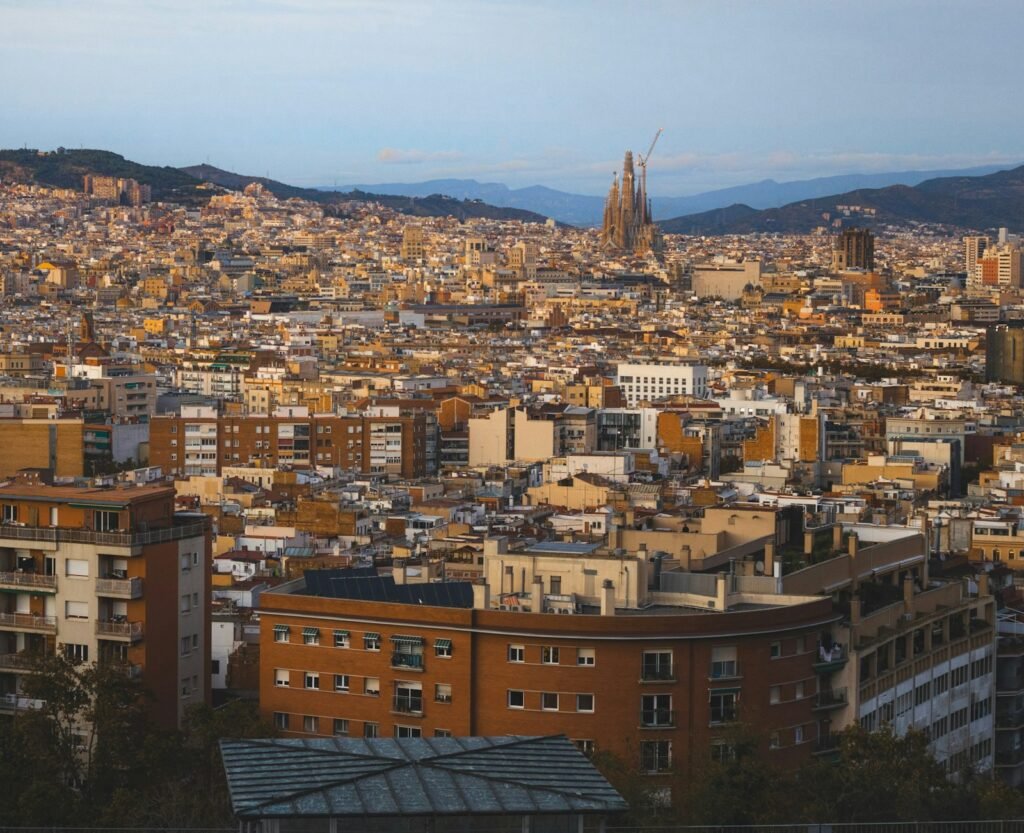
Finding the best area to stay in Barcelona is one of those decisions that shapes everything about your trip, and most people leave it until too late.
This post contains affiliate links. If you book through them, I may earn a small commission at no extra cost to you.
TL;DR
– For first-timers: Eixample is the most sensible choice, central, safe, and close to the main Gaudí sights – The Gothic Quarter puts you in the medieval heart of the city but brings crowds and noise at night – El Born is the best pick for couples or foodies who want personality over pure sightseeing convenience – Gràcia feels genuinely local and rewards visitors staying four or more nights – Barceloneta is the only real option if beach access is the main point of your trip – Avoid booking near the airport or on Las Ramblas itself: both are traps that cost more than they save
I once made the classic mistake. I found a deal on an apartment near El Prat airport and convinced myself I was being clever: cheaper nightly rate, easy arrival. What I failed to account for was 40 minutes each way on the metro, every single day. By day two we were spending the best part of two hours of our holiday underground. The savings evaporated inside 24 hours, and the exhaustion was real.
Barcelona is a bigger, more spread-out city than most first-time visitors expect. Your neighbourhood shapes everything: how much you walk, how much you spend on transport, how well you sleep, and how quickly you can reach the things you actually came to see. Getting it right is worth an hour of research before you touch a hotel search engine. This guide will save you that hour.
Before diving in, one practical point: plan your trip with the tourist tax in mind. Barcelona charges a surcharge on top of all accommodation costs. Budget for around tourist tax of EUR4 per person per night in municipal charges, plus a regional surcharge of EUR1.70 to EUR3.50 depending on hotel category. It is capped at seven nights and under-16s are exempt, but factor it into your maths before you think you have found a bargain.
Does your neighbourhood choice really matter in Barcelona?
Yes, more so than in most European cities. Barcelona’s metro is well-connected and a typical journey between central areas takes 10 to 15 minutes, at roughly two minutes per metro stop. But position yourself badly and you are adding 30 to 45 minutes of travel to every outing, both ways. That is an hour of your holiday spent underground for every single day.
The city divides broadly into three zones. The Old Town (Ciutat Vella) covers the Gothic Quarter, El Born, and the port area. Eixample is the wide, grid-plan district immediately north, home to Gaudí’s major buildings. Beyond that sit the outer neighbourhoods: Gràcia to the north and Barceloneta to the south-east on the seafront. Each has a completely different atmosphere, price bracket, and crowd density.
Which area is right for you?
| Traveller type | Best area |
|---|---|
| First-timers | Eixample |
| Couples or romantic trip | El Born or Gràcia |
| Families | Eixample or Barceloneta |
| Young adults or nightlife | Gothic Quarter or El Born |
| Beach-focused trip | Barceloneta |
| Solo travellers | Gothic Quarter or El Born |
| Longer stay, 5+ nights | Gràcia |
| Budget priority | Left Eixample (Esquerra) |
Where to stay Barcelona for first-timers: is Eixample the best choice?
Yes, Eixample is the most consistently strong choice for first-time visitors. It sits at the centre of the city, giving you straightforward metro access to the Gothic Quarter, El Born, and Barceloneta, without placing you inside the Old Town’s noise and crowds at night.
The neighbourhood is built on a grid, designed in the 19th century by urban planner Ildefons Cerdà, with wide boulevards and distinctive chamfered corners at each intersection. This makes it far easier to navigate than the medieval street plan of the Old Town. It is also the address for Barcelona’s most famous Gaudí buildings. The Sagrada Família, Casa Batlló, and Casa Milà (La Pedrera) are all within walking distance of each other. Book tickets online before you arrive: the Sagrada Família in particular sells out weeks ahead in summer. For a full list of Barcelona highlights worth planning around, check our dedicated guide.
Eixample is generally considered one of the safer central neighbourhoods, with a residential population that keeps the streets active at all hours. Left Eixample (Esquerra de l’Eixample) tends to be slightly cheaper than Right Eixample (La Dreta) while remaining equally well connected.
Who it suits: First-timers, families, architecture lovers, anyone who wants a central base without the late-night noise of the Old Town.
Watch-out: No beach access. Barceloneta is a 15 to 20 minute metro ride. If daily beach time is essential, read the Barceloneta section first.
Is the Gothic Quarter the right choice for your Barcelona trip?
It depends entirely on your tolerance for crowds and noise. The Gothic Quarter places you in the medieval heart of Barcelona: narrow cobbled streets, fragments of Roman wall, and the Cathedral of Barcelona right on your doorstep. Most major sights are walkable, and the beach at Barceloneta is a 20-minute walk or a short metro hop.
The honest trade-off: the Gothic Quarter is heavily visited from spring to autumn. Crowds build from mid-morning on the main streets and noise continues well into the night. Some visitors love the energy. Others find it exhausting after two nights. Hotels here also tend to be more expensive than comparable rooms in Eixample, without necessarily being better.
Pickpocketing is the most common issue in this area, particularly on Las Ramblas and in the busy squares. Keep bags in front of you and avoid back pockets. The area is well-lit and active at night, so personal safety in the broader sense is not a major concern: petty theft is what you are watching for.
Who it suits: Short stays of two to three nights, solo travellers, visitors who want maximum sightseeing convenience, night owls.
Watch-out: Noisy, crowded, and pricier than alternatives. Light sleepers should specifically ask for a room on a quieter interior courtyard or side street.
El Born: best for a boutique Barcelona experience
El Born is what many visitors imagine when they picture Barcelona at its most enjoyable. Sitting between the Gothic Quarter and Barceloneta, it is noticeably less touristy than its neighbour while still being central. The streets here are full of independent boutiques, natural wine bars, and some of the best tapas restaurants in the city: places where the menu changes daily and the queue is mostly locals.
The neighbourhood centres on the Basílica de Santa Maria del Mar, one of Barcelona’s most beautiful medieval churches, and the Mercat de Santa Caterina. Parc de la Ciutadella, the city’s main park, borders El Born to the east. The beach at Barceloneta is a 20-minute walk via the old port, which is a pleasant route in itself.
El Born works particularly well for couples. If you are considering romantic city breaks in Europe, the combination of boutique hotels, atmospheric restaurants, and a less frantic pace than the Gothic Quarter makes Barcelona’s El Born one of the strongest options. Accommodation runs slightly higher than Eixample: budget around GBP150 to GBP250 per night (USD190 to USD320) in mid-range properties during peak season.
Who it suits: Couples, foodies, anyone on a three to five night trip who wants character and good food rather than pure convenience.
Watch-out: Fewer budget options than Eixample. Getting out to the airport or train stations requires more planning than from the Gothic Quarter or Eixample.
Is Gràcia the right choice for a longer, quieter stay?
Yes, for visitors staying four or more nights, Gràcia is arguably the strongest neighbourhood in the city. Sitting just north of Eixample, it has the look and rhythm of a village that got absorbed into a larger city: pedestrian squares, independent bakeries, bars where the same group of regulars sits in the same corner every evening. It is a genuinely local area in a way that most of central Barcelona no longer is.
It takes a day or two to appreciate. On the first day you might feel slightly removed from things. The Old Town is a 15-minute metro ride and the Sagrada Família is about 20 minutes on foot. By day three, once you have found your café, your market, and the wine bar that stays open late, you will understand why visitors who stay here tend to recommend it strongly.
For families on longer trips, Gràcia also works well. There is a good local market (Mercat de l’Abaceria), reliable supermarkets, and the neighbourhood squares have the kind of relaxed, residential feel where children running around is entirely normal.
Who it suits: Visitors staying four or more nights, couples who want a neighbourhood feel, families on longer trips.
Watch-out: Not suited to very short stays as it takes time to settle in. Late-night nightlife is limited compared to the Gothic Quarter or El Born.
Where to stay Barcelona if the beach is your priority?
Barceloneta is the only sensible answer. The neighbourhood sits directly on the Mediterranean, with a wide sandy beach, seafood restaurants running along the passeig, and a relaxed seaside rhythm that is quite different from the rest of the city. The beach access here is some of the best you will find on any city break in Europe: long, well-maintained, and reliably warm from June through September.
Be realistic about what Barceloneta offers. It is excellent for beach days, cold beers at the chiringuitos (beach bars), and evening paella at the harbour restaurants. It is less suited as a base for a sightseeing-heavy trip. The Gothic Quarter is a 15-minute walk, but Eixample and the Gaudí buildings require a metro ride. Accommodation trends expensive for the quality: you are paying for the location, not the room. Prices spike considerably in July and August, and availability disappears fast.
Search available hotels and apartments on Booking.com filtering by the Barceloneta neighbourhood for current prices and availability. For families combining sea and city, this is the area to shortlist first.
Who it suits: Beach-focused trips, families wanting guaranteed sea access, couples combining city and coast.
Watch-out: Noisy at night near the beach bars, especially at weekends. Sightseeing from here involves more metro use than from Eixample or the Old Town.
Areas to think twice about
A few situations worth flagging before you book.
Near the airport: As I explained at the start of this guide, accommodation near El Prat airport is a false economy for anyone planning to sightsee. The metro from Terminal 1 or Terminal 2 takes 40 minutes to the city centre, each way. That is over an hour of daily commuting. Unless you have a very early departure flight and need one final night close to the terminal, stay in the city proper.
On Las Ramblas itself: The boulevard is worth a walk but is one of the highest-pickpocketing streets in Europe. Hotels directly on it charge a premium for what is often average accommodation. Addresses one or two streets either side are quieter and significantly better value.
Far-out alternatives: Poblenou and Sant Martí suit visitors specifically seeking a younger, creative scene, but they add transit time to everything. For context on what is available across price brackets, the guide to budget accommodation options covers the trade-offs worth understanding before you commit.
For Barcelona tours and experiences once you have your base sorted, GetYourGuide has a solid selection covering Gaudí buildings, Gothic Quarter walking tours, and day trips from the city.
Always check the latest travel advisories from your government before travelling.
Frequently Asked Questions
Where should I stay in Barcelona as a first-time visitor?
Eixample is the most consistent recommendation for first-timers. It sits at the centre of the city, has excellent metro connections in every direction, and puts you within walking distance of the main Gaudí buildings. The Gothic Quarter is also popular with first-timers, but it is noisier and more crowded, which suits some travellers and frustrates others after a couple of nights.
Where to avoid staying in Barcelona?
Avoid accommodation near the airport unless you have a very early departure and need one night close to the terminal. The commute into the city takes around 40 minutes each way. Also think carefully about hotels directly on Las Ramblas: it is enjoyable to walk but noisy and heavily targeted by pickpockets.
Is the Gothic Quarter safe for tourists?
The Gothic Quarter is generally considered safe for tourists, but it has a high rate of petty theft, particularly pickpocketing on Las Ramblas and in crowded squares. Keep bags in front of you, avoid back pockets, and do not carry more cash than you need for the day. The area is well-lit and busy at night, which limits other concerns.
What is the difference between El Born and the Gothic Quarter?
Both are in the Old Town, but El Born has fewer tour groups, more independent restaurants, and a noticeably more local feel. The Gothic Quarter is more central for the main sights but significantly more touristy, especially in summer. Visitors who spend five or more nights in Barcelona often prefer El Born over the Gothic Quarter for the overall experience.
Which area of Barcelona is best for families?
Eixample is the most practical choice for families: spacious, safe, easy to navigate, and close to the Sagrada Família and other major sights. Barceloneta suits families who want daily beach access. Gràcia works well for longer family stays, with local markets, quieter residential streets, and a pace that does not feel relentlessly touristic.