Updated September 2026
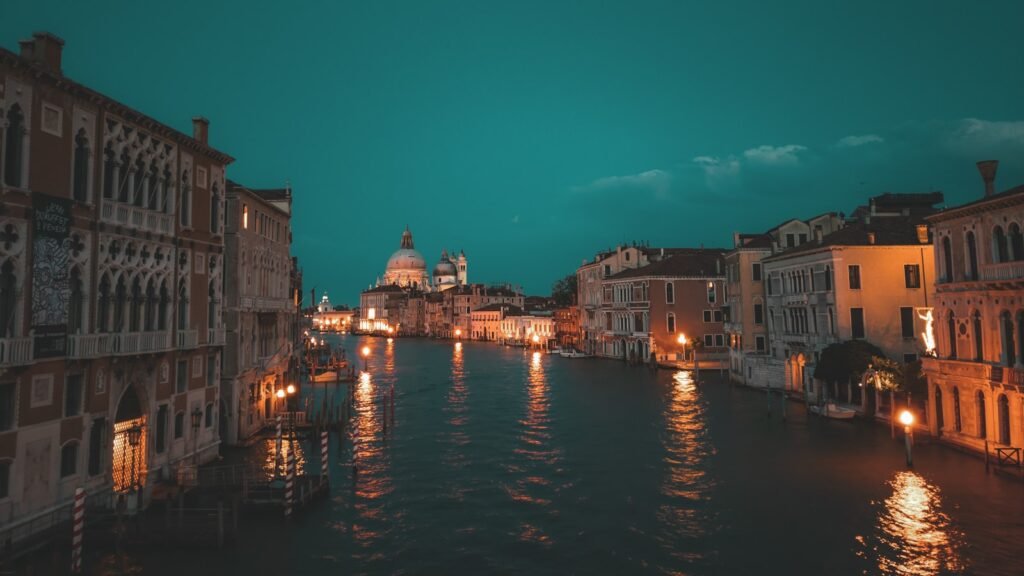
Short answer: Venice is the most romantic city in the world, with Paris, Kyoto and Lisbon close behind. Venice wins because it has no cars: after dark the only sounds are water and footsteps, and no other city can copy that.
Romantic is a slippery word in travel writing, usually meaning expensive and photogenic. The cities that actually work for couples share something more specific: they are walkable at night, they have somewhere to sit for hours, and they reward doing very little.
The most romantic cities at a glance
| City | Best for | Best time | Budget |
|---|---|---|---|
| Venice | The classic, car-free evenings | Oct to Apr | High |
| Paris | Food, walks, long dinners | May, Jun, Sep | High |
| Kyoto | Quiet and contemplative | Apr, Nov | Mid |
| Lisbon | Sunset viewpoints on a budget | Mar to May, Sep to Oct | Low to mid |
| Prague | Fairy-tale old town | Apr to Jun, Dec | Low to mid |
| Bruges | A slow weekend | Apr to Jun, Dec | Mid |
| Santorini | Sunsets and sea views | May, Oct | High |
| Buenos Aires | Late nights and tango | Oct to Dec | Low |
| Vienna | Coffee houses and music | May, Sep, Dec | Mid |
| Marrakech | Riads and warm winter sun | Oct to Apr | Low to mid |
| Charleston | North American charm | Mar to May, Oct | Mid |
| Ljubljana | Small, calm and cheap | May to Sep | Low |
1. Venice, Italy
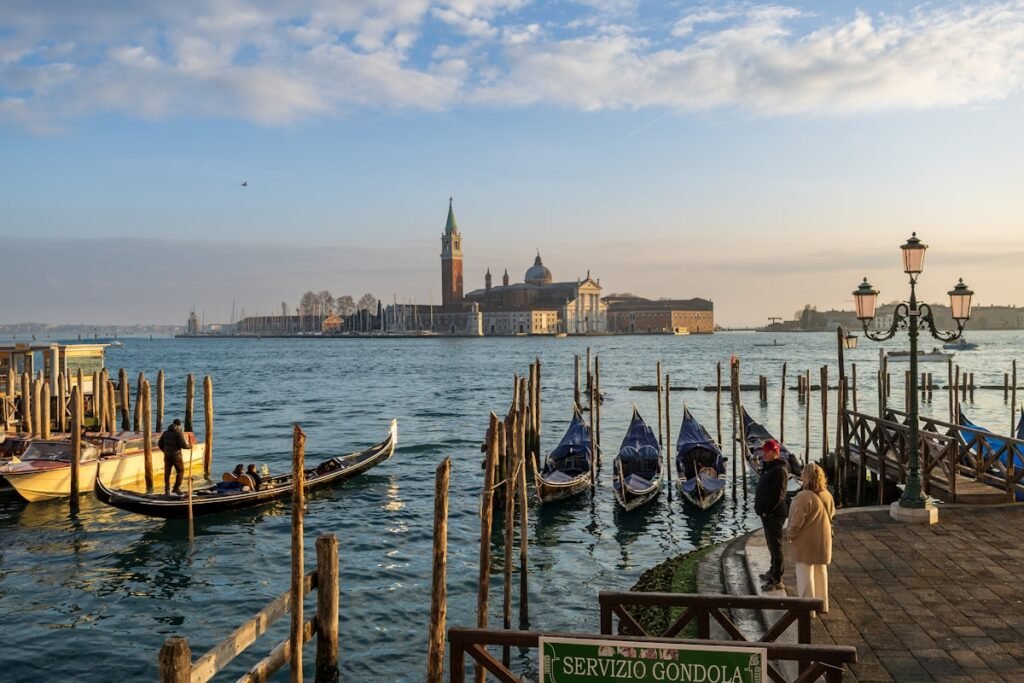
The obvious one, and still the strongest. Venice has no cars, which means the only sound after dark is water and footsteps. Skip the gondola at midday and walk Cannaregio and Dorsoduro in the evening once the day trippers have left.
Staying overnight is the whole point. Venice now charges day-trippers an entry fee on its busiest days, and the city empties noticeably after the last trains and cruise passengers leave. Take a vaporetto down the Grand Canal at night instead of paying for a gondola, have a spritz and cicchetti at a bacaro, and cross to the quiet islands of Burano or Torcello for an afternoon.
Where to stay: Dorsoduro or Cannaregio for calm evenings a short walk from everything. Planning a longer trip? See our Italy honeymoon planning guide.
2. Paris, France
Overexposed and still very good, provided you avoid trying to see everything. Pick one arrondissement, eat slowly, and walk the Seine after dinner.
The romantic Paris is small and specific: the Île Saint-Louis on a weekday evening, the lanes of Montmartre early in the morning before the crowds arrive, a picnic along the Canal Saint-Martin, the Eiffel Tower sparkling on the hour after dark, seen from the Trocadéro rather than from the queue at the top.
Where to stay: the Marais or Saint-Germain. Our list of the most interesting places in Paris has more ideas.
3. Kyoto, Japan
Different in register, quieter and more contemplative. The Philosopher’s Path at dawn, Gion in the evening, and a ryokan with a private bath. Best in cherry blossom or autumn maple season, when it is also busiest.
Kyoto rewards early starts more than anywhere on this list. The Arashiyama bamboo grove and the gates of Fushimi Inari are crowded by mid-morning but almost empty at first light. Afternoons are for temple gardens, tea houses and walking the lanes of Higashiyama.
Where to stay: Higashiyama or near Gion, ideally one night in a traditional ryokan. See our guide to the best places to visit in Japan for the first time.
4. Lisbon, Portugal
Hills, tiles, viewpoints and fado. Cheaper than most of this list, warm well into autumn, and the miradouros are essentially built for sitting with someone at sunset.
Spend an evening in the Alfama listening to fado over dinner, watch the sun go down from the Miradouro da Senhora do Monte, and take a day trip to the palaces and forests of Sintra. The famous tram 28 is more fun seen than ridden, as it is usually packed.
Where to stay: Alfama for atmosphere, Chiado or Príncipe Real for restaurants. Read our Lisbon travel guide.
5. Prague, Czech Republic
The Old Town at 6am before anyone is awake is the version worth having. Charles Bridge is unpleasant at midday and extraordinary at first light.
Beyond the centre, climb Petřín Hill for the view over the red roofs, walk the ramparts of Vyšehrad at sunset, and spend an evening in a quiet wine bar in Malá Strana. Prague is also one of the best-value romantic cities in Europe, and it is lovely at Christmas.
Where to stay: Malá Strana for quiet cobbled streets. See our Prague travel guide.
6. Bruges, Belgium
Small enough to cover on foot in a weekend. Stay overnight, because the town changes completely once the coaches leave.
Walk the canals after dark, when the bridges and gabled houses are lit, and stroll around the Minnewater, known locally as the Lake of Love. Take a canal boat, eat mussels and chocolate, and do very little else.
Where to stay: inside the old ring canal, within walking distance of the Markt.
7. Santorini, Greece
Earns its reputation for the caldera sunset and loses points for crowds. Stay in Imerovigli or Oia and visit in May or October rather than August.
The trick is to watch the sunset from your own terrace rather than from Oia’s crowded castle walls. Walk the clifftop path from Fira to Imerovigli, take a catamaran around the caldera, and try the island’s crisp white Assyrtiko wine at one of the local wineries.
Where to stay: Imerovigli for the calmest caldera views. Our Santorini guide for couples covers hotels and timing.
8. Buenos Aires, Argentina
Late dinners, tango, and grand faded architecture. The most underrated romantic city on most lists, and excellent value.
Dinner starts at 10pm here, and the evening often goes on well after midnight. Walk the leafy streets of Palermo, browse the Sunday market in San Telmo, and go to a milonga, the dance halls where locals tango, rather than a tourist show.
Where to stay: Palermo or Recoleta.
9. Vienna, Austria
Coffee houses where sitting for three hours is the intended use, plus opera and imperial architecture. Very good in December.
Ride the giant Ferris wheel in the Prater at dusk, catch a concert or cheap standing tickets at the opera, and spend an evening at a Heuriger, the wine taverns on the edge of the city among the vineyards. The Christmas markets make it one of the best winter city breaks in Europe.
Where to stay: the Innere Stadt or the Neubau district. See our Vienna travel guide.
10. Marrakech, Morocco
A riad courtyard with a plunge pool is a different kind of romantic. Intense during the day, calm behind the walls.
Spend the mornings in the souks and gardens, retreat to the riad for the heat of the afternoon, and have dinner on a rooftop as the call to prayer drifts over the medina. For something special, spend a night at a desert camp in the Agafay, less than an hour outside the city.
Where to stay: a riad inside the medina. More in our guide to interesting places in Morocco.
11. Charleston, USA
Antebellum architecture, walkable historic streets and a strong food scene. The best option in North America for this.
Walk past the pastel houses of Rainbow Row to the waterfront Battery at sunset, take a carriage ride through the historic district, and book at least one dinner at one of the city’s celebrated Southern restaurants. Spring, when the azaleas are out, is the prettiest season.
Where to stay: the historic downtown south of Broad Street.
12. Ljubljana, Slovenia
Small, riverside, largely car-free in the centre, and almost unknown to couples planning European trips.
Evenings are spent at café tables along the Ljubljanica river, with the castle lit up on the hill above. Lake Bled is under an hour away, which makes it easy to combine a city break with one of the most romantic lakes in Europe.
Where to stay: the old town, near the Triple Bridge. Lake Bled is one of our best romantic getaways in Europe.
Making it work
- Go in shoulder season. Crowds ruin romance faster than weather does.
- Stay central and walkable. Being able to walk back from dinner matters more than hotel facilities.
- Book one thing, leave the rest open. Over-planned trips leave no room for the part that actually works.
- Prioritise early mornings. Almost every city on this list is transformed before 8am.
Choosing by the kind of trip you want
Romantic covers several very different holidays, and matching the city to the mood matters more than picking from a ranking.
- Slow and quiet. Bruges, Ljubljana, Kyoto. Small, walkable, and nothing demanding your attention.
- Grand and cultural. Vienna, Paris, Prague. Architecture, music, museums, long dinners.
- Warm and sensory. Lisbon, Marrakech, Seville. Light, food, colour, outdoor evenings.
- Late nights. Buenos Aires, Madrid, Naples. Cities that come alive after 10pm.
- Dramatic scenery. Santorini, Positano, Queenstown. Views as the main event.
Timing, which matters more than the destination
The same city can be magical or miserable depending on the month. Broadly:
- Venice. October to April, avoiding Carnival if you dislike crowds. Summer is hot and packed.
- Paris and Vienna. May, June, September, and December for markets.
- Kyoto. Late March to early April and November, both spectacular and busy. May and October are the quieter compromise.
- Lisbon and Seville. March to May and September to October. Peak summer heat in Seville is severe.
- Santorini. May, early June, late September, October.
- Buenos Aires. October to December and March to May.
What actually makes a romantic trip work
Having planned and unplanned this many times, the pattern is consistent and has little to do with budget.
- Stay central even if it costs more. The ability to walk back from dinner, or return to the room mid-afternoon, changes the whole trip. A cheaper hotel 30 minutes out costs you the evenings.
- Book one dinner properly. One reserved, considered meal is worth more than five improvised ones, particularly in cities where the good places fill weeks ahead.
- Plan one thing per day, maximum. Romantic trips die from itineraries. The good parts happen in the gaps.
- Take one early morning. Every city on this list is transformed before 8am, and it is the only time you will have the famous places to yourselves.
- Build in a rest afternoon. Exhaustion is the most common cause of tension on short trips.
- Agree the budget beforehand. Money disagreements on holiday are the single most avoidable source of friction.
Overrated and underrated
Some honest assessments, since most lists avoid them.
- Overrated: gondola rides in Venice at midday, the Eiffel Tower summit queue, Santorini in August, and any restaurant with a view and a tourist menu.
- Underrated: Ljubljana, Porto, Ghent instead of Bruges, Valletta, and Tbilisi, which is arguably the best value romantic city break in Europe right now.
Frequently asked questions
What is the most romantic city in the world?
Venice remains the strongest single answer, mainly because the absence of cars changes the atmosphere in a way no other city replicates. Paris is the most popular choice, and Kyoto is the best pick for couples who want somewhere calmer.
What is the most romantic city in Europe on a budget?
Lisbon, Prague and Ljubljana. All three have beautiful old towns and viewpoints at a fraction of the cost of Venice or Paris. Outside the EU, Tbilisi is even cheaper.
What is the most romantic city for a honeymoon?
Venice or Kyoto for a city honeymoon, often combined with a beach afterwards, such as the Amalfi Coast after Venice. Our guide to the best honeymoon destinations in the world covers more options.
How long should a romantic city break be?
Three to four nights suits most of these. Two feels rushed once travel is deducted, and beyond five most couples want to add a second place.
Which is best for a proposal?
Somewhere with a reliable quiet moment rather than a famous backdrop. Early morning in Venice, a Lisbon miradouro at sunset, or the Philosopher’s Path in Kyoto at dawn.
For longer trips, see the best romantic getaways for couples in Europe.