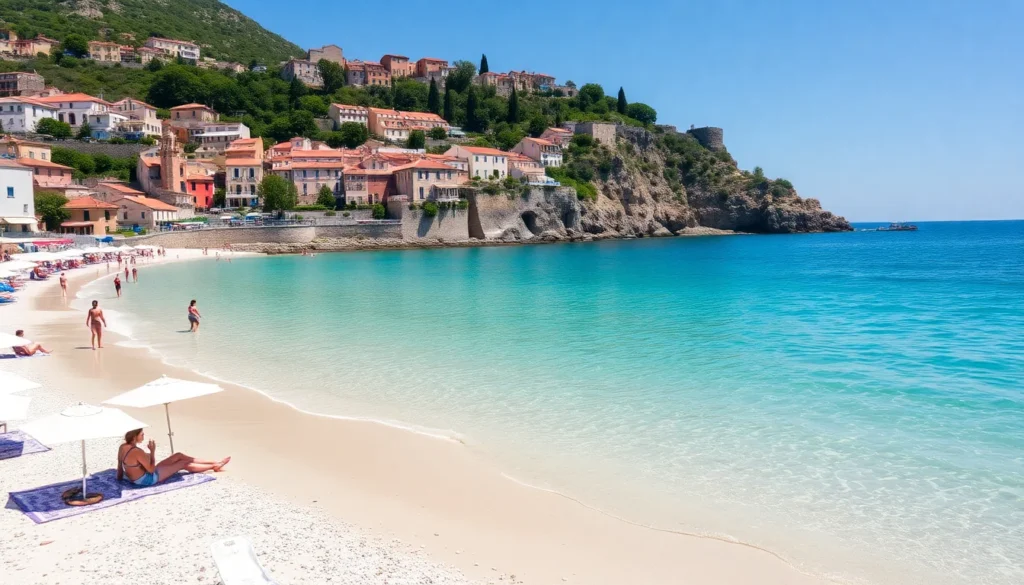
European beach holidays have a reputation for being expensive – and some of them genuinely are. But Europe is a large and varied continent, and the price gap between its most and least expensive beach destinations is enormous. The same week in the sun that costs £3,000 in Santorini can cost £900 in Albania. The beach, the sea, and the sun are equally real in both.
This guide focuses specifically on the cheapest beach destinations in Europe for families – places with calm, safe swimming, child-friendly facilities, affordable accommodation, and reasonable food costs. All prices are rough 2025 estimates for a family of four.
The Cheapest Beach Destinations in Europe for Families
1. Albania – The Adriatic’s Best Kept Secret
Albania has emerged as one of Europe’s best value beach destinations over the past five years, and families are starting to notice. The Albanian Riviera stretches from Vlore to Saranda and offers some of the clearest, least crowded water in the Mediterranean. Beaches like Drymades, Gjipe, and Ksamil (near the Greek border) are spectacular.
Cost: A family of four can eat dinner at a seafood restaurant for €20 to €30. Decent holiday apartments rent for €40 to €70 per night. Budget for around €80 to €120 per day all-in for a family, including activities.
2. Bulgaria (Sunny Beach and Sozopol)
Bulgaria’s Black Sea coast has been a popular budget destination for European families for decades – and for good reason. Sunny Beach is the main resort, with extensive child-friendly hotel infrastructure, water parks, and shallow swimming. Sozopol, further south, is a historic coastal town with a more relaxed atmosphere and lower prices still.
Cost: All-inclusive family packages frequently start at £600 to £900 per week from UK airports. Self-catering is even cheaper. Food and activities are substantially less expensive than Western Europe – budget meals for a family of four around €15.
3. Portugal (Alentejo Coast)
While the Algarve has become expensive, Portugal’s Alentejo coast – between Lisbon and the Algarve – remains significantly more affordable. Beaches like Comporta, Porto Covo, and Zambujeira do Mar are wild, uncrowded, and extraordinarily beautiful. The water is cool (Atlantic, not Mediterranean) but the landscape is dramatic.
Cost: 30 to 40 percent cheaper than equivalent Algarve accommodation. Vila Nova de Milfontes is the main town and has good family infrastructure. Seafood restaurants average €10 to €15 per main course.
4. Greece (Mainland and Lesser-Known Islands)
The Cyclades (Santorini, Mykonos) are expensive. But Greece has dozens of islands and a long mainland coast that are dramatically more affordable. The Pelion Peninsula, Halkidiki, and islands like Lefkada, Kefalonia, and Ikaria offer superb beaches, genuine Greek hospitality, and costs a fraction of the famous islands.
Halkidiki in northern Greece is particularly family-friendly – three peninsulas of pine forests, sandy beaches, and crystal water at prices well below the premium islands. A family-friendly taverna dinner averages €25 to €35 for four people including drinks.
5. Turkey (Aegean Coast)
Turkey offers some of the best value beach holidays in the European region, particularly the Aegean coast around Bodrum, Marmaris, and Fethiye. The water is warm, the beaches are excellent, all-inclusive resorts are extensive and affordable, and the food culture is outstanding for families – mezze, grilled fish, and fresh vegetables at prices that feel almost impossibly low by Western standards.
Cost: All-inclusive packages for a family of four start from around £700 to £1,000 per week. Independent travel is even better value – a full restaurant meal for four with drinks averages £15 to £20 in most coastal resorts.
6. Croatia (Dalmatian Islands)
Croatia has become more expensive in recent years, but its smaller Dalmatian islands – Korcula, Vis, Lastovo – remain much more affordable than Dubrovnik or Split and offer a genuinely off-the-beaten-track experience. The water is exceptionally clear and calm, ideal for children learning to swim.
Ferry connections make island-hopping with children manageable. Accommodation on the quieter islands is still predominantly local family-run apartments, which are far better value than hotel chains. If you’re planning a longer European road trip that includes beach stops, see our guide on the best places to visit in Europe on a budget for combining coastal and city destinations cost-effectively.
Tips for Keeping Costs Down on European Family Beach Holidays
- Book accommodation with a kitchen – self-catering saves substantially on food costs for families
- Travel in late June or early September rather than peak July/August for significantly lower prices and fewer crowds
- Look at regional airports – flying into a secondary airport near your destination can halve flight costs
- All-inclusive packages offer the best budget predictability for families, even if they cost slightly more upfront
- Choose destinations with calm, shallow beaches rather than surf beaches for younger children
Frequently Asked Questions
What is the cheapest beach country in Europe for families?
Albania and Bulgaria consistently come out cheapest for comparable quality. Both offer excellent beaches, warm summer weather, and dramatically lower prices than Western or Southern European alternatives. Albania is less developed (which some families prefer) while Bulgaria has more established resort infrastructure.
Which European beach is best for young children?
For young children, the key factors are shallow, calm water and sandy beaches (not rocky). Bulgaria’s Black Sea coast, Turkey’s Aegean resorts, and sheltered Dalmatian bays all score highly. The Mediterranean and Adriatic are generally calmer than Atlantic beaches, which matters for families with toddlers.
Final Thoughts
A memorable family beach holiday in Europe doesn’t require a premium budget. Albania, Bulgaria, Turkey, and Portugal’s less-visited coast all deliver sun, sea, and genuine quality at prices that make a family holiday achievable rather than aspirational. The key is knowing which destinations offer value and which ones are living on their reputation.