Santorini Greece white blue dome sunset

15 Most Interesting Places in Santorini, Greece (2026 Travel Guide)

in

Santorini

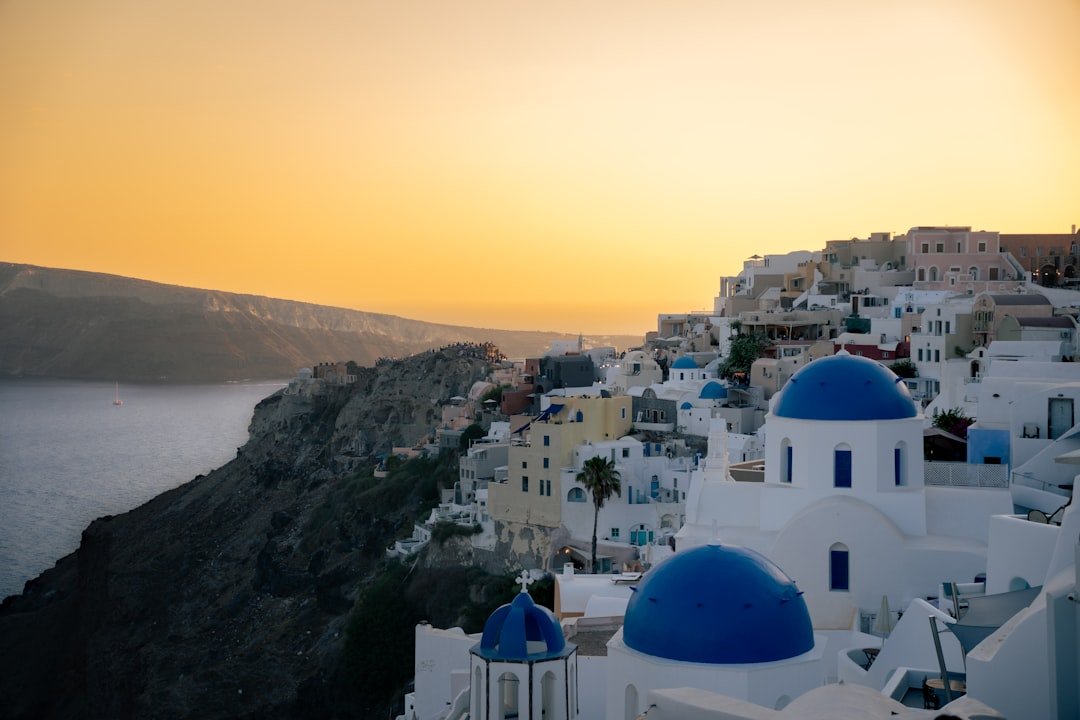
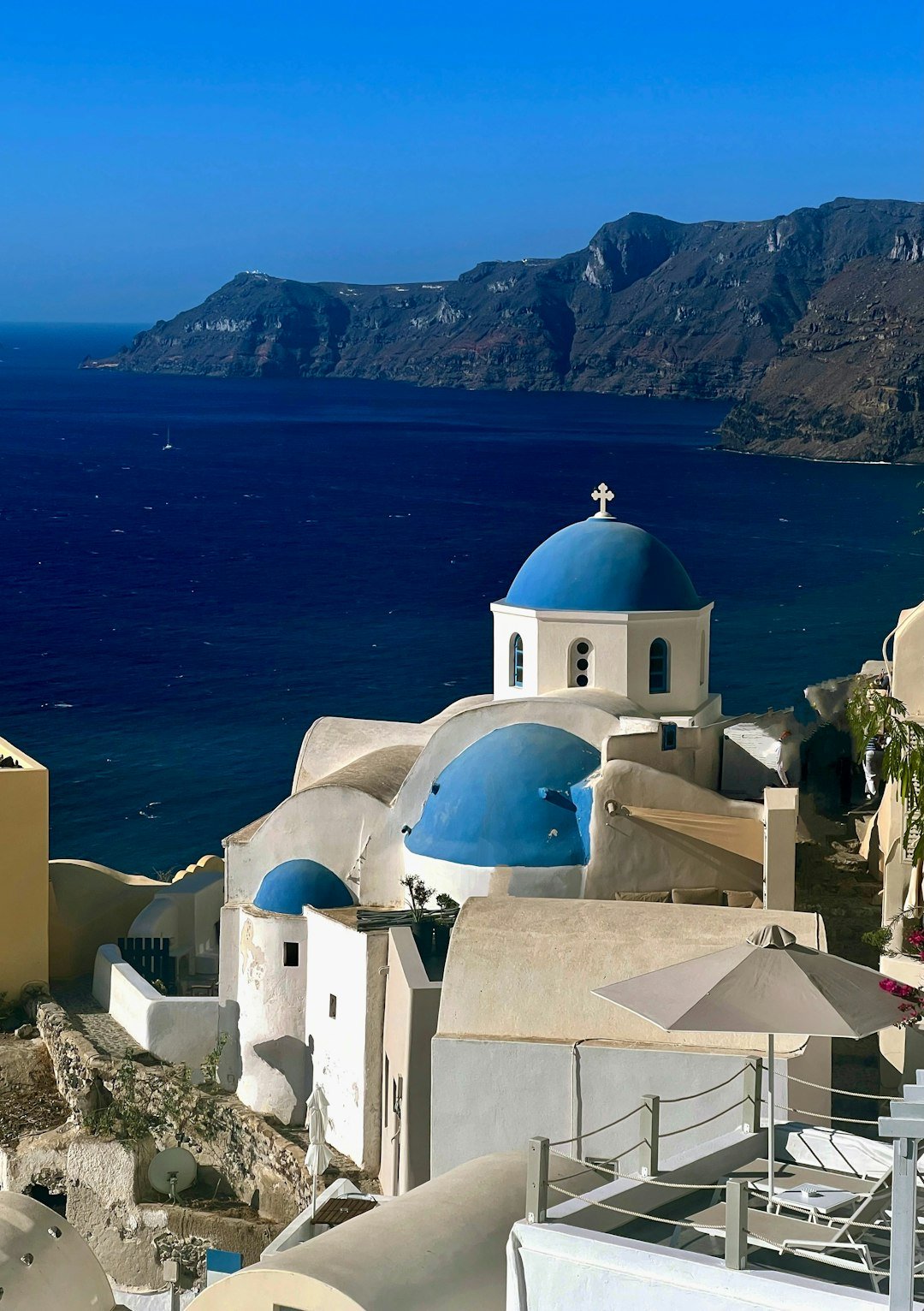
Santorini is the most recognizable island in the Mediterranean — the white-washed cubic buildings, the blue-domed churches, the caldera cliffs dropping 300 meters to the sea. The photographs do not lie: the island really does look like that, in every direction, in the golden light of morning and the deep amber of sunset.

But Santorini is also a volcanic island of great geological interest, ancient Minoan civilization, excellent Assyrtiko wine, black sand beaches of extraordinary drama, and villages that existed long before the tourism industry discovered them. The famous views are real and worth every effort to see. What makes Santorini one of the most interesting places in Europe is everything else as well.

Iconic Santorini Landmarks Every Visitor Must Experience

1. Oia at Sunset – The Most Photographed Moment in Greece

The sunset from the clifftop village of Oia, when the sun drops behind the volcanic caldera and the sky turns orange, pink, and violet above the white buildings and blue domes, is one of the most photographed scenes in the world. It is also genuinely as beautiful as the photographs suggest — which is rare enough to deserve acknowledgment.

Thousands of visitors gather on the castle ruins at the northern end of Oia for the main event. For a quieter and equally beautiful perspective, find a cafe terrace with caldera view in the village itself.

Practical tip: Arrive in Oia by midday to find a restaurant terrace with sunset view for the evening — they book up completely by mid-afternoon. The walk from Fira to Oia along the caldera rim (10km, 3 hours) is the finest approach.

Book now: Santorini sunset caldera sailing cruise via GetYourGuide

2. The Caldera – A Drowned Supervolcano

The Santorini caldera — the enormous flooded crater at the center of the archipelago — is the result of one of the largest volcanic eruptions in human history, approximately 3,600 years ago. The explosion (estimated at 40 times the force of Krakatoa) may have contributed to the collapse of Minoan civilization. The flooded caldera is 12 kilometers across and 400 meters deep, with two active volcanic islands (Nea Kameni and Palea Kameni) still steaming in its center.

The view of the caldera from the clifftop villages is the defining image of Santorini. A boat tour to the volcanic islands and the hot springs between them adds geological depth to the visual experience.

Book now: Santorini volcano and hot springs boat tour via Viator

3. Fira – The Island’s Capital With the Best Caldera Walk

The island’s capital of Fira sits at the top of the caldera cliff with the finest concentration of caldera-view restaurants, bars, and boutiques. The famous 580 steps from Fira down to the old port (or the cable car if you prefer) descend to where cruise ships tender their passengers.

The caldera walk from Fira to Oia is the finest walk on the island — 10 kilometers of clifftop path above the sea with views at every step.


Lesser-Known Santorini Attractions Worth Every Detour

4. Akrotiri – A Minoan Pompeii

The Bronze Age settlement of Akrotiri on Santorini’s southern tip was buried by the volcanic eruption around 1600 BC and preserved almost perfectly in volcanic ash — a Minoan Pompeii. The excavated site, covered by a modern protective structure, reveals multi-story buildings with intact staircases, pottery storage vessels still in position, and frescoes of such quality that they have been removed to the National Archaeological Museum in Athens.

It is one of the most interesting places in Santorini for visitors who want to understand the island’s extraordinary pre-tourism history.

Practical tip: Entry is 12 euros. Visit in the early morning before tour groups arrive. The site is covered and comfortable in all weather.

Book now: Akrotiri archaeological site guided tour via GetYourGuide

5. Red Beach – Volcanic Drama at the Water’s Edge

The Red Beach near Akrotiri is one of the most dramatic beaches in Greece — enormous red and black volcanic cliffs rising from a pebble beach of deep red pumice. The approach by boat from the old port of Akrotiri avoids the dangerous footpath along the cliff base (currently closed for safety) and provides the best views of the volcanic geology.

Practical tip: The path along the cliff base is closed — access is by boat or a longer inland route. Take a water taxi from Akrotiri port for 5 euros each way.

6. Ancient Thira – Ruins Above the Sea

The ancient city of Thira on the Mesa Vouno mountain ridge between Kamari and Perissa has been inhabited since the 9th century BC. The ruins of the Hellenistic, Roman, and Byzantine city — including a theatre, temple of Apollo, gymnasium, and Byzantine church — sit at 370 meters with views down to the black sand beaches on both coasts simultaneously.

The site is consistently undervisited and the combination of ancient ruins with panoramic island views is extraordinary.

7. Santorini Wine Tasting – Assyrtiko and the Volcanic Terroir

Santorini’s volcanic soil and unique training method (vines coiled into low baskets to protect against wind) produces Assyrtiko grapes of extraordinary mineral intensity. The island’s wines — particularly from estates like Santo Wines, Sigalas, and Gavalas — are among the finest in Greece and quite unlike any wine produced on mainland soil.

Practical tip: Santo Wines on the caldera cliff has the most spectacular tasting terrace. Sigalas in Oia produces the most critically acclaimed Assyrtiko. Book tasting sessions in advance for peak season.

Book now: Santorini wine tasting tour with vineyard visits via Viator


Hidden Gems in Santorini Only Slow Travelers Find

8. Pyrgos – The Authentic Village the Tourists Miss

The inland village of Pyrgos at the highest point of Santorini is what the island’s villages looked like before tourism transformed the caldera towns. The medieval Kasteli fortress at its center, the small church of Theotokaki with caldera views, and the local kafeneion (coffee house) where elderly residents play backgammon — all of it is a 10-minute drive from Fira but feels like a different island.

The Franco Sigalas estate produces excellent wine from vines on the Pyrgos hillside.

9. Thirassia – Santorini Without Santorini’s Crowds

The small island of Thirassia across the caldera from Santorini was part of the same landmass until the volcanic eruption separated it. Its single clifftop village of Manolas has a handful of tavernas and stunning caldera views. Day boats from Santorini stop for 1-2 hours — staying overnight makes you one of perhaps 30 tourists on an island of 200 people.

10. Perissa and Perivolos – Black Sand Beach Life

The long black sand beaches of Perissa and Perivolos on Santorini’s eastern coast are the island’s beach destination — a 3-kilometer stretch of black volcanic sand with beach bars, water sports, and good tavernas, backed by the Mesa Vouno mountain. The black sand absorbs heat dramatically — bring beach shoes and arrive early for a spot.

11. Megalochori – A Village of Wineries and Silence

The traditional wine-producing village of Megalochori in the center of the island has exactly one tourist cafe and an atmosphere of deep provincial calm. The village square, lined with two-story neoclassical mansions and barrel-storage caves cut into the volcanic rock, is one of the most picturesque in Santorini and almost entirely visitor-free.

12. Ammoudi Bay – The Port Below Oia

The tiny fishing port of Ammoudi Bay at the base of Oia’s caldera cliff — reached by 300 steps or by donkey — has five seafood tavernas on a terrace directly above the water, serving octopus grilled on charcoal, sea urchin, and fresh fish at tables where the sea laps the rocks. It is the finest seafood experience on the island.

Practical tip: Book for lunch rather than dinner — the boat trip back after dark requires climbing 300 steps. Combine with swimming off the rocks at the base of the cliff.

13. Imerovigli – The Quietest Caldera Village

Between Fira and Oia, the small village of Imerovigli sits at the highest point of the caldera cliff — 350 meters above the sea — with views that exceed both its more famous neighbors. The Skaros Rock, a medieval fortress outcrop projecting from the cliff, is accessible via a 20-minute scramble from the village and provides a completely different perspective on the caldera.

14. Emporio – The Walled Medieval Village

The village of Emporio in the south of the island was built as a fortified medieval settlement — its exterior houses forming a continuous defensive wall around a kasteli (inner fortress) still almost entirely intact. The narrow lanes inside the fortification walls, the windmills on the southern edge, and the near-absence of tourists make Emporio one of the most interesting places in Santorini for those interested in the island’s pre-tourist history.

15. Caldera at Midnight – Santorini When the Day Boats Leave

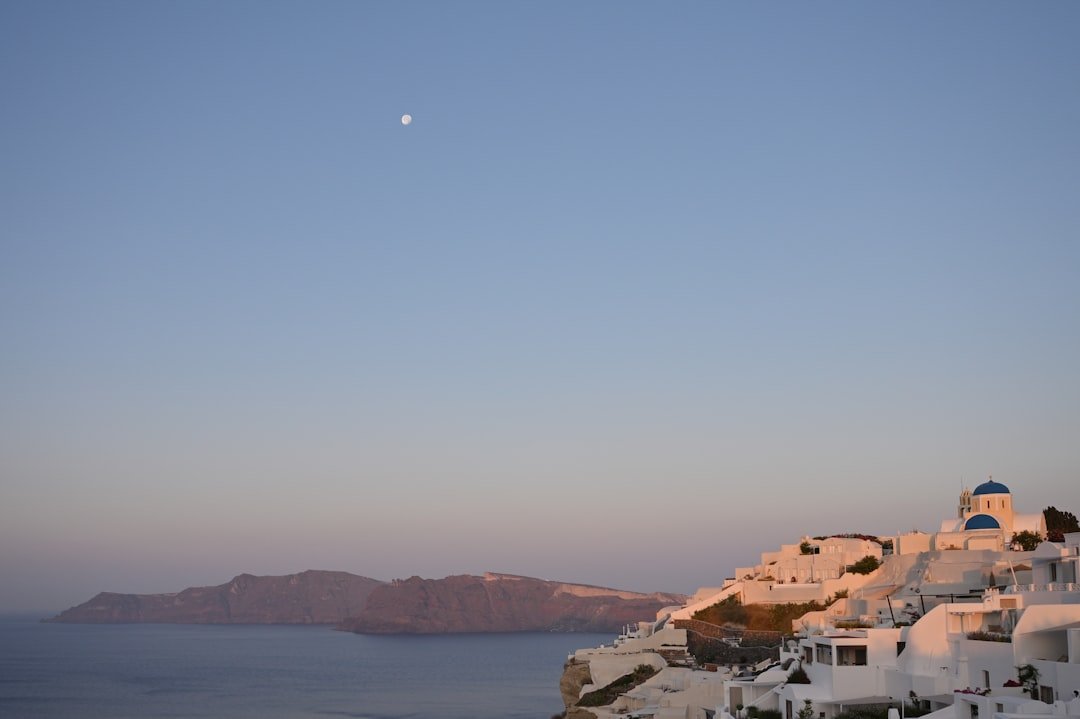
The most interesting version of Santorini is the one that exists after 9 PM, when the day-tripper cruise ships have sailed and the streets of Oia and Fira belong mostly to residents and overnight guests. The caldera at midnight, lit by a half-moon, with the lights of the volcanic islands reflecting in the black water, is as beautiful as the famous sunset.

Practical tip: Stay at least three nights on the island rather than visiting as a day trip from another island. Santorini’s character only reveals itself to those who are still there after dark.


Practical Santorini Travel Tips

Best time to visit Santorini: April to June and September to October are ideal — warm, beautiful, and significantly less crowded and cheaper than July to August. November to March is off-season with many businesses closed, but prices are at their lowest and the island has genuine tranquility.

Getting around: The island bus (KTEL) connects all major villages cheaply. Renting an ATV (quad bike) provides the most flexible exploration. Taxis are available but expensive — agree the fare before departing.

Accommodation: Caldera-view cave hotels in Oia and Imerovigli are the definitive Santorini experience but among the most expensive in Greece. Perissa and Kamari offer good-value accommodation on the beach side.

Cruise ship crowds: Fira and Oia are genuinely overwhelmed by cruise ship day-trippers between 10 AM and 6 PM from June to September. Plan important visits outside these hours or during shoulder season.


Final Thoughts on Interesting Places in Santorini

Santorini is one of those rare places where the hype is justified and the reality exceeds expectations. The caldera sunset, the volcanic beaches, the ancient ruins buried in ash — all of it together makes an island that is genuinely unlike anywhere else in the Mediterranean.

The key to getting the most from it is time. Two days is not enough. Four days allows the island to reveal itself — the morning light on the caldera, the quiet village of Pyrgos at midday, the black beach in the afternoon, the Oia sunset in the evening, the Ammoudi fish dinner by lamplight.

That is Santorini at its most interesting.


Exploring Europe? Read our complete guides to Interesting Places in Paris, Interesting Places in Rome, and Interesting Places in Barcelona.

Tags :

Santorini

Share This Post :

Destinations

Recent Posts

Popular Tags

Africa Travel Algarve Asia Travel Bali Attractions Barcelona Barcelona Attractions Beauty Booking Cape Town Europe Travel Greece Greek Islands Guide Hidden Gems Bali Hidden Gems Barcelona Hidden Gems Rome Iceland Italy Kilimanjaro Lisbon Minimalism Nordic North Porto Portugal Attractions Rome Rome Attractions Room Safari Santorini Santorini Attractions Serengeti Sigiriya South Africa South Africa Attractions Spain Sri Lanka Sri Lanka Attractions Sri Lanka Beaches Tanzania Tanzania Safari Thailand Thailand Attractions USA Travel Zanzibar