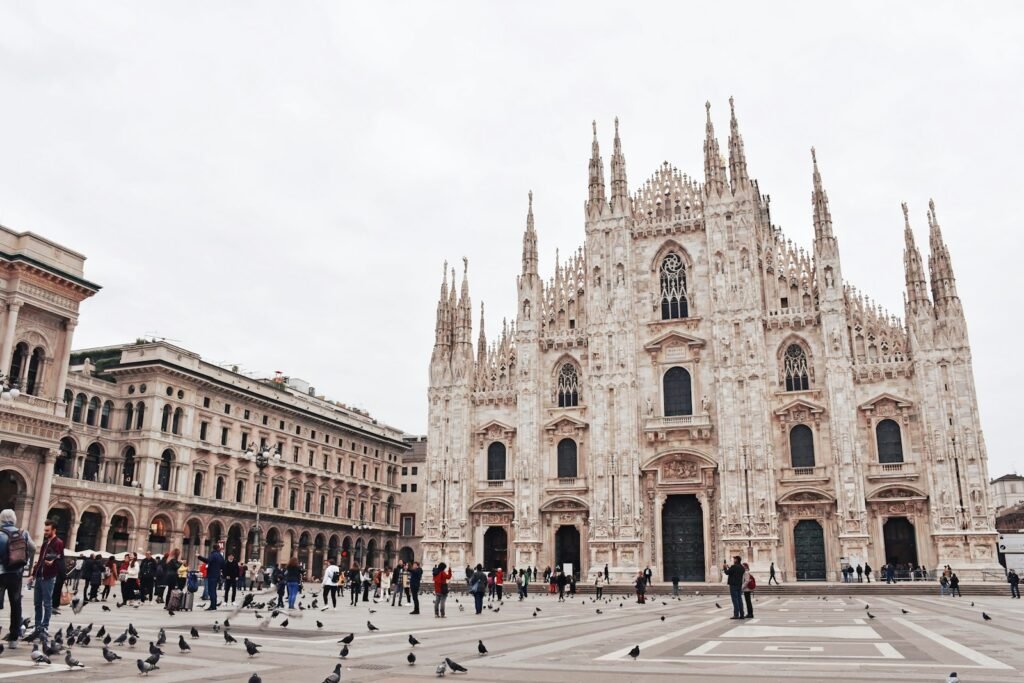
Milan gets written off as the city you pass through on the way to Lake Como, and that reputation is only half deserved. It is not Florence and it is not trying to be. What it is, once you stop expecting a postcard, is the most functional city in Italy: excellent food, world-class galleries, the best public transport in the country, and an aperitivo culture that genuinely earns the hype.
Where you sleep matters more here than in most Italian cities, because Milan is bigger than visitors expect and the difference between a good base and a bad one is roughly forty minutes of your day, every day. This guide covers the six areas actually worth considering, what each costs, and the one part of town that keeps catching people out.
The short answer
If you have two or three days and it is your first visit, stay in Brera. It is walkable to the Duomo in ten minutes, quieter at night than the centre, and it feels like somewhere people live rather than a retail concourse. If Brera is beyond budget, Porta Venezia gives you most of the same access for noticeably less.
- First visit, want everything walkable — Duomo / Centro Storico
- Best all-rounder — Brera
- Nightlife and aperitivo — Navigli
- Design, coffee, younger crowd — Isola
- Value without feeling remote — Porta Venezia or Porta Romana
- Avoid unless the price is exceptional — the immediate blocks around Centrale station
Duomo and Centro Storico
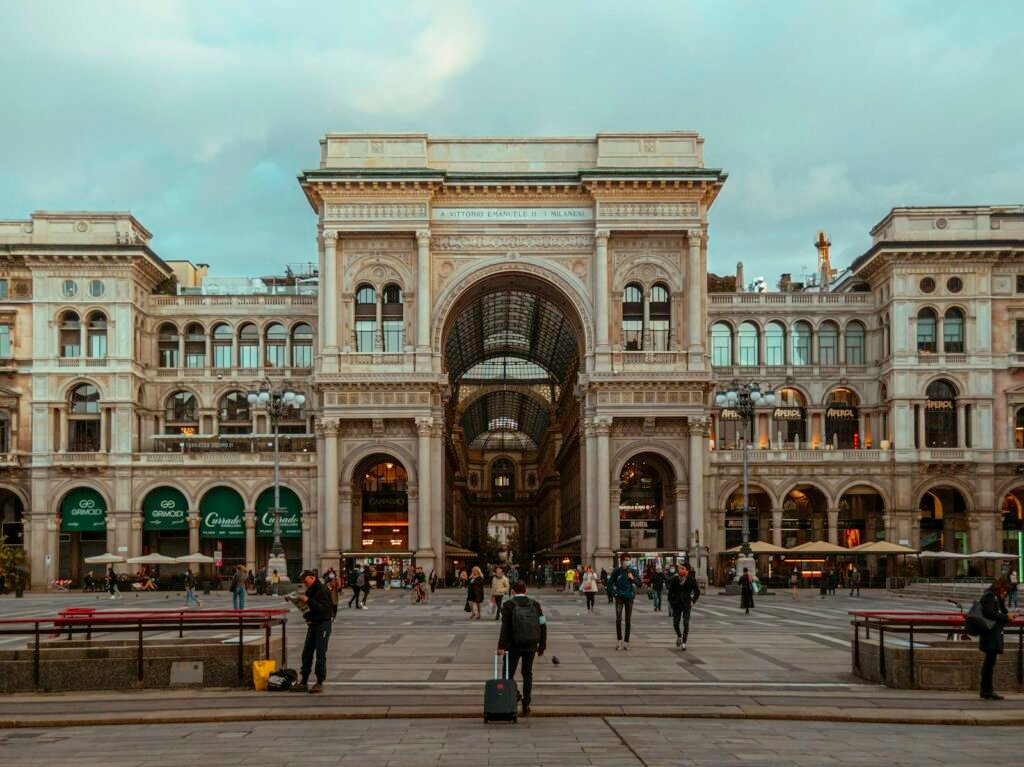
The historic centre puts the cathedral, the Galleria Vittorio Emanuele II, La Scala and the Palazzo Reale within a few minutes of each other. For a short first trip this is genuinely convenient, and convenience in Milan is worth paying something for.
What you pay is the issue. Mid-range hotels around the Duomo run roughly €150–280 a night, with boutique and luxury properties starting around €300. Central Milan as a whole commands something like a 30 to 50 per cent premium over semi-central neighbourhoods for what is often a smaller room.
The other trade-off is atmosphere. The streets immediately around the Duomo empty of Milanese after the shops close and fill with the specific dead energy of a shopping district at night. You are near everything and surrounded by nobody.
Stay here if: you have 48 hours, you are travelling with someone who tires easily, or it is your only trip to Milan and you want the cathedral out of the window.
Brera
Brera is the answer for most people. It sits just north of the Duomo, close enough to walk everywhere that matters, and it has what the centre lacks: cobbled streets, small galleries, wine bars with four tables, and residents.
The Pinacoteca di Brera is one of Italy’s great collections and is genuinely underrated next to the Uffizi and the Vatican. La Scala is a short walk. Mid-range properties sit around €140–220, with boutique hotels from roughly €200 — marginally below the Duomo for a considerably better evening.
Stay here if: you want one base that works for sightseeing, dinner and a walk afterwards without changing neighbourhoods.
Navigli
The canal district, and the centre of Milan’s aperitivo culture. Along the Naviglio Grande the bars put out buffet spreads from around 6pm, and for the price of a drink you eat reasonably well — a Milanese institution rather than a tourist gimmick.
It is also loud. Genuinely loud, on weekends, until late. Rooms facing the canal are the ones with the view and the ones you will not sleep in. If you book here, ask for a courtyard-facing room and take the answer seriously.
Navigli is a 25-minute walk or two metro stops from the Duomo, and prices sit slightly below Brera for equivalent quality.
Stay here if: your evenings matter more than your mornings.
Isola
Isola was a working-class district cut off by the rail lines — hence the name, “island” — and is now the most interesting part of the city. It sits beside the Bosco Verticale towers and Porta Nuova, so you get contemporary architecture, independent design shops, third-wave coffee and street art in a few walkable blocks.
It is further out, but that matters less than it sounds because the metro is genuinely good. Prices are meaningfully lower than Brera for comparable rooms.
Stay here if: you have been to Milan before, or you would rather eat where locals eat than where the guidebook says.
Porta Venezia and Porta Romana
These two are the value picks, and they are what I would suggest to anyone finding the centre unaffordable. Both are residential, well connected, and close enough to walk into the centre in 20 to 25 minutes.
Porta Venezia has the city’s best concentration of Eritrean and Ethiopian restaurants, a legacy of Italian colonial history, and borders the Giardini Pubblici. Porta Romana is quieter and more residential, with good local trattorias and easy tram access.
Expect three-star properties around €90–150, against €150–280 for the equivalent in the centre.
Where not to stay
The blocks immediately around Milano Centrale look ideal on a map. The station is the transport hub, rooms are cheap, and the airport buses leave from outside. In practice the area is scruffy, poorly lit at night and has a persistent pickpocket problem, and you are a metro ride from anywhere you actually want to be.
It is not dangerous so much as thoroughly unpleasant, and the saving over Porta Venezia is usually small enough not to justify it. The exception is a genuinely early flight or a late arrival, where one night near the station is a reasonable trade.
What it costs, roughly
- Hostel bed — €25–45
- Budget hotel, peripheral — €50–75
- Three-star, semi-central — €90–150
- Mid-range, Duomo or Brera — €140–280
- Boutique and luxury, central — €200–400+
Booking 60 to 90 days out typically lands 20 to 30 per cent below walk-up rates, and midweek can run €30–80 below the same room on a Saturday.
The two weeks to avoid
This is the single most useful thing to know about booking Milan. Twice a year the city fills completely and rates double or worse.
Salone del Mobile, the international furniture and design fair, takes over the entire city in April. Fashion Week runs twice a year, in late February and September. During both, hotels that normally cost €150 will ask €400, availability collapses, and restaurants need booking days ahead.
If your dates are flexible, check them before you book anything. If they are not, book unusually early — three to four months rather than two.
Getting around
Milan’s metro is the best in Italy: four lines, clean, frequent, and simple to read. A single ticket covers 90 minutes including transfers, and a 24-hour pass costs a little over two singles, so it pays for itself quickly.
This is why staying slightly out is far less painful in Milan than in Rome or Naples. Isola to the Duomo is under ten minutes on the M5. Judge an area by its metro stop rather than the distance on the map.
From Malpensa airport, the Malpensa Express train to Centrale or Cadorna takes around 50 minutes. Cadorna is the better arrival point for Brera and the centre.
Frequently asked questions
How many days do you need in Milan?
Two full days covers the Duomo, the Pinacoteca di Brera, the Castello Sforzesco and an evening in Navigli. Three lets you add The Last Supper and a slower pace. Book Last Supper tickets weeks ahead — entry is timed and strictly capped.
Is Milan walkable?
The centre is, comfortably. The city as a whole is not, which is why the metro matters. Most visitors walk within their neighbourhood and ride between them.
Is Milan safe at night?
Broadly yes, with normal city caution. Pickpocketing around Centrale, the Duomo and on crowded metro lines is the main risk rather than anything more serious.
Is Milan a good base for the lakes?
Yes, and this is underrated. Como is around 40 minutes by train from Cadorna, and Bergamo about an hour. You can day-trip comfortably without changing hotels.
Which airport should I fly into?
Malpensa has the most long-haul routes and a fast train link. Linate is far closer to the centre and better if you can get a flight there. Bergamo is the budget-airline option and roughly an hour out by coach.
Planning more of the country? See our guide to the best places to visit in Italy, and for the coast, the Amalfi Coast travel guide. If you are watching the budget across a longer trip, how to travel Europe on a budget is worth reading first.