The best time to visit Bali is during the dry season, from April to October, when days are sunny, humidity is lower and the sea is calmer on most coasts. The sweet spots are the shoulder months of April to June and September, which have dry-season weather without the July and August crowds. The wet season from November to March is hotter and more humid with heavy tropical downpours, but it’s also cheaper, greener and much quieter.
Bali sits just south of the equator, so the temperature barely changes through the year. Daytime highs sit around 30 to 33°C (86 to 91°F) on the coast in every month. What changes is the rain, the humidity and the number of people. This guide covers both seasons, what each month is like, and the dates that are worth planning around.
Bali’s two seasons
Dry season: April to October
Rain becomes rare from May, and June to August are the driest and slightly coolest months, with pleasant evenings, especially in the hills around Ubud and Munduk. This is the best time for beach days in the south, hiking Mount Batur for sunrise, snorkeling around Nusa Penida and the Gili Islands, and surfing the famous breaks on the Bukit Peninsula around Uluwatu.
July and August are peak season. Summer holidays in Europe and Australia fill the island, traffic in Canggu, Seminyak and Ubud gets heavy, and hotel prices go up. You’ll enjoy the same weather with far fewer people in May, June or September.
Wet season: November to March
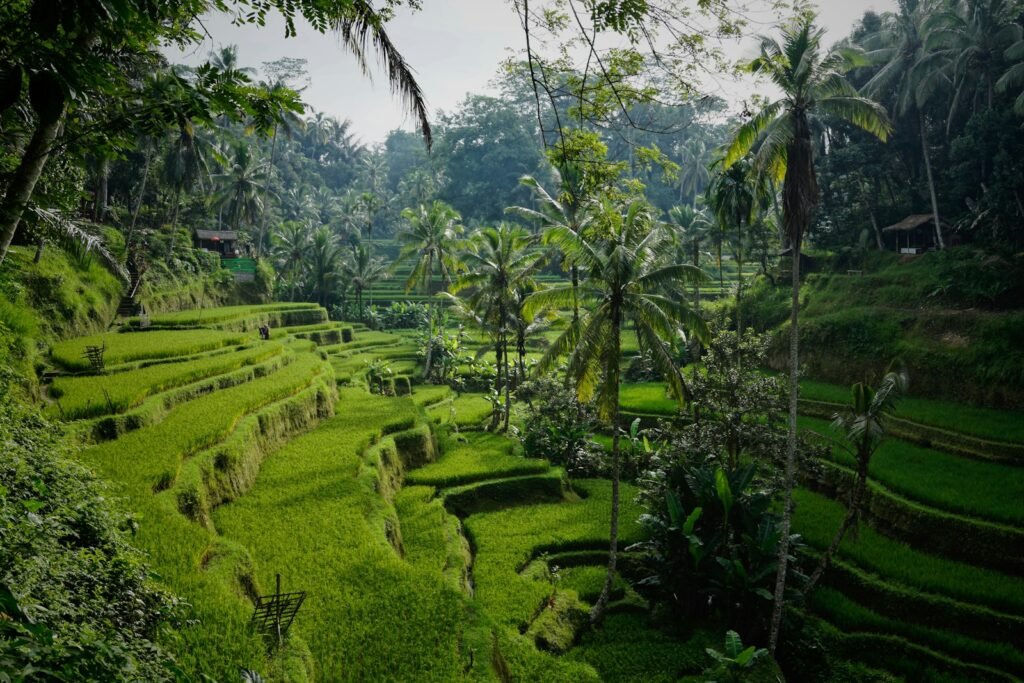
The wet season brings high humidity and heavy rain, usually as intense showers in the afternoon or overnight rather than all-day drizzle. December to February are the wettest months. You’ll still get plenty of sunshine between the storms, and the rice terraces around Jatiluwih and Tegallalang are at their greenest.
There are trade-offs. Seas get rougher on the west and south coasts, some boat crossings to Nusa Penida and the Gilis are cancelled in bad weather, and beaches on the west coast can collect washed-up rubbish during the monsoon. On the other hand, the east coast around Sanur and Keramas gets its best surf in these months, and accommodation is much cheaper, except over Christmas and New Year, which is very busy.
Bali month by month
| Month | Weather | Crowds and prices |
|---|---|---|
| January | Wet, humid, frequent storms | Busy early in the month, then quiet |
| February | Wet | Low |
| March | Rain easing | Low, check the Nyepi date |
| April | Mostly dry, green landscapes | Moderate, good value |
| May | Dry and sunny | Moderate, one of the best months |
| June | Dry, cooler evenings | Moderate to busy |
| July | Dry | Peak |
| August | Dry, breezy | Peak |
| September | Dry | Moderate, one of the best months |
| October | Mostly dry, getting humid | Moderate |
| November | Rains begin | Low |
| December | Wet | Low until mid-month, then peak for the holidays |
Dates to plan around
Nyepi, the Day of Silence
Nyepi is the Balinese Hindu new year, and it usually falls in March, occasionally in early April. The date moves every year with the Balinese calendar, so check it before you book. For 24 hours, from 6am to 6am, the whole island stops. The airport closes, no one may leave their hotel, lights are kept low and there’s no traffic on the roads. The night before, villages parade huge papier-mâché ogoh-ogoh figures through the streets. It’s a remarkable thing to see, but make sure your flights don’t fall on Nyepi itself.
Galungan and Kuningan
These festivals come around every 210 days in the Balinese calendar, so they fall at different times each year. During Galungan, tall decorated bamboo poles called penjor line the roads, and families visit temples in their best clothes. Kuningan follows ten days later. It’s one of the most colorful times to be on the island, though some shops and services close.
Indonesian school holidays
Domestic tourism picks up around the end of June and early July, and around the end of Ramadan (Eid al-Fitr, whose date also shifts each year). Popular spots can be busier than usual during these weeks.
Best time for specific activities
- Mount Batur sunrise trek: best from April to October, when the summit is more likely to be clear and the path is dry.
- Diving and snorkeling: April to November has the best visibility. Manta rays can be seen at Nusa Penida year round, while mola mola (ocean sunfish) appear in colder water from about July to October.
- Surfing: the west coast and Uluwatu are best in the dry season, and the east coast breaks work best in the wet season.
- Rice terraces: they’re greenest from the end of the rains, around March and April, though timing depends on the planting cycle in each area.
- Yoga retreats and spa stays: any time of year, and cheaper in the wet season.
Tips for visiting in either season
In the dry season, book accommodation early for July and August, and plan around traffic by staying in one or two areas instead of moving every night. Distances look short on the map but can take hours.
In the wet season, plan outdoor activities for the morning and keep afternoons flexible. Choose a hotel with a pool and a covered area, because you’ll probably spend a few afternoons waiting out the rain. Pack a light rain jacket and shoes that can get wet, and keep some buffer time around boat trips in case they’re cancelled.
For more on the island, read our guides to the most interesting places in Bali, the top 10 places in Bali and our Bali honeymoon guide.
Frequently asked questions
What is the best month to visit Bali?
May and September are often considered the best months. Both have dry, sunny weather, and they’re quieter and cheaper than July and August.
What is the cheapest time to visit Bali?
The wet season months of February, March and November are usually the cheapest, apart from the dates around Nyepi. Avoid the Christmas and New Year period if you’re traveling on a budget.
Does it rain all day in Bali’s wet season?
Usually not. Rain tends to come in heavy bursts, often in the afternoon or at night, with sunshine in between. Some days are fully wet, especially in January and February, but most travelers still get plenty of time outdoors.
Is December a good time to visit Bali?
December is in the wet season, so expect heavy rain and high humidity. The first half of the month is quiet and good value. From around the 20th, the holidays bring crowds and some of the highest prices of the year.