Split is a Roman emperor’s retirement palace with a city grown inside it. That is not a metaphor — Diocletian’s Palace is not a ruin you visit but a living quarter with flats, bars and laundry lines strung between fourth-century walls. Understanding that is most of what you need to choose where to sleep.
Split is also the main ferry port for the Dalmatian islands, which shapes trips here more than people expect. Where you stay affects how painless your 6am departure to Hvar is going to be.
The short answer
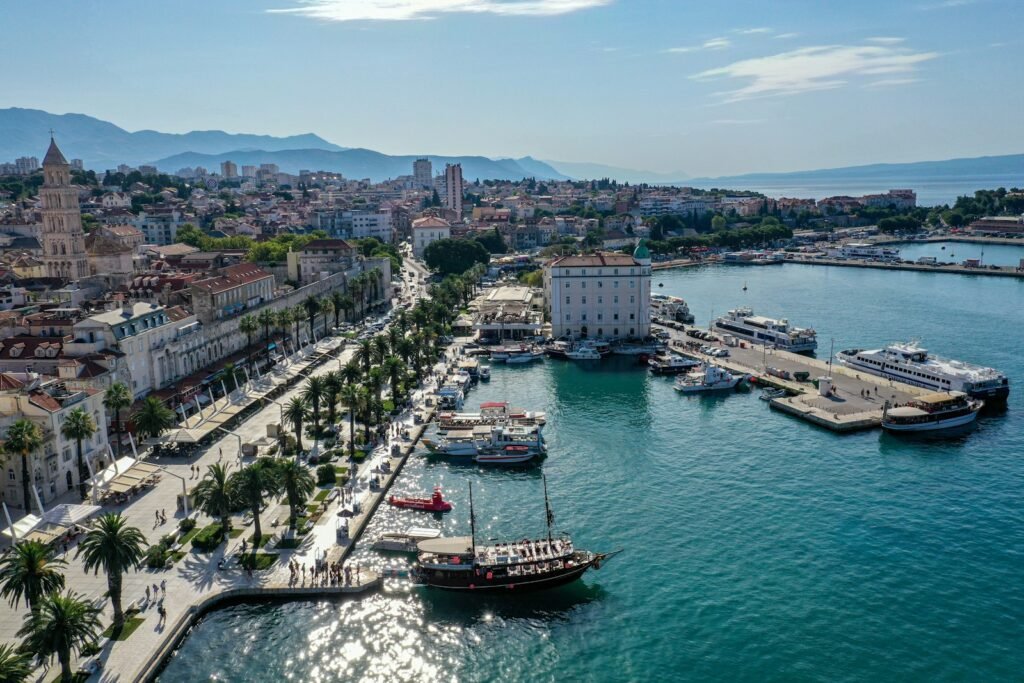
Stay inside or immediately around Diocletian’s Palace for a first visit — it is the experience, and everything including the ferry port is walkable. If you are here for a beach holiday rather than a city break, Bačvice is the better call.
- First visit, short stay — Diocletian’s Palace / Old Town
- Beach and nightlife — Bačvice
- Quiet, local, walkable — Varoš
- Space and sea views — Meje or Marjan
- Value — Manuš or Lovret
- Light sleepers — not inside the Palace walls in summer
Diocletian’s Palace and the Old Town
Staying within the palace walls is genuinely memorable. Apartments are carved into Roman substructures, the Peristyle is thirty seconds from your door, and early mornings before the cruise passengers arrive are the best hours in Split.
Three practical warnings. First, noise: the palace is stone, sound carries, and the bars run late from June to September. Second, cruise ships — on heavy days the old town is genuinely unpleasant between about 10am and 4pm. Third, access: cars cannot enter, so expect a walk with your luggage over polished, slippery marble.
Stay here if: two or three nights, city break, and you value atmosphere over sleep.
Varoš
The old fishermen’s quarter climbing the hill just west of the palace. Low stone houses, steep lanes, and a handful of excellent konobas. It is five minutes from the Riva promenade but feels residential, and it is where I would send most repeat visitors.
It also puts you at the foot of Marjan hill, which is the best thing in Split that is not Roman — a forested peninsula with paths, viewpoints and swimming spots.
Bačvice
East of the centre, around Split’s main sandy beach — unusual on this coast, where most beaches are pebble. The water is famously shallow, which is how the local game of picigin came to be played there.
It is a 15-minute walk to the old town along the water, and the area has the concentration of beach clubs and late bars. Good for a beach-led trip and for anyone travelling with children; less good if you want quiet.
Meje and Marjan
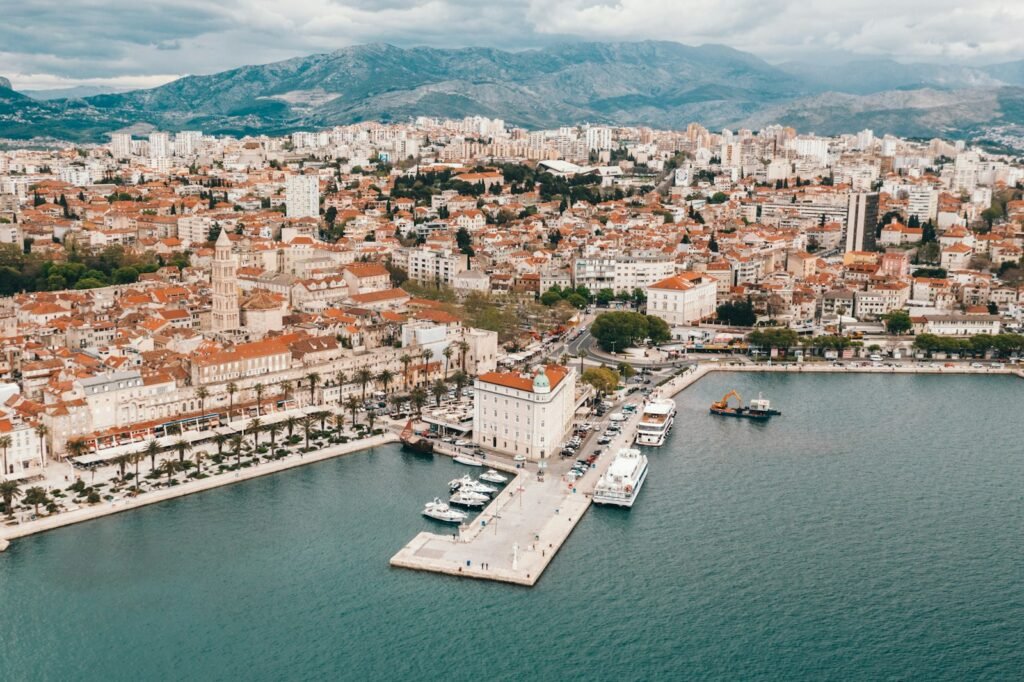
West along the coast below Marjan hill, this is the affluent residential side of Split: villas, sea views, swimming coves, and very little noise. Expect a 20 to 30 minute walk into town or a short bus ride.
Stay here if: you have a car, or you are staying a week and want a base rather than a bolthole.
Manuš and Lovret
Immediately north and northwest of the centre, ordinary Split neighbourhoods within a 10 to 15 minute walk of the palace. This is where the value is — the same city, noticeably lower rates, no view.
The ferry question
If your trip includes Hvar, Brač, Vis or Korčula, factor the port into your choice. The ferry terminal sits at the eastern end of the Riva, a few minutes from the palace and about 15 from Bačvice.
Summer catamarans to the islands often leave early and sell out, particularly for Hvar and Vis. Book ahead in July and August rather than turning up, and stay walkable to the port on the night before an early sailing.
What it costs, and when
Croatia adopted the euro in 2023 and prices on the coast have risen since. Split is no longer the bargain it was a decade ago, though it remains below Italian equivalents.
Expect hostel beds from around €25–45, apartments and mid-range hotels €80–160, and old-town boutique properties from €180 upward. July and August are the peak by a wide margin; late May, June and September give you swimmable sea at meaningfully lower rates.
Frequently asked questions
How many days do you need in Split?
Two is enough for the palace, the Riva and Marjan. Use extra days for island trips rather than more time in the city.
Is Split better than Dubrovnik?
Different. Dubrovnik is more spectacular and more expensive; Split is a working city with better food and easier island access. Many trips do both.
Do I need a car?
No, and parking in the centre is difficult and costly. Hire one only for Krka or the inland national parks, and check parking with your accommodation first.
Are the beaches good?
In the city, adequate rather than special — Bačvice is sandy and busy, Kašjuni below Marjan is nicer. The exceptional beaches are on the islands.
Nearby: the Dubrovnik travel guide and where to stay in Dubrovnik if you are combining the two.