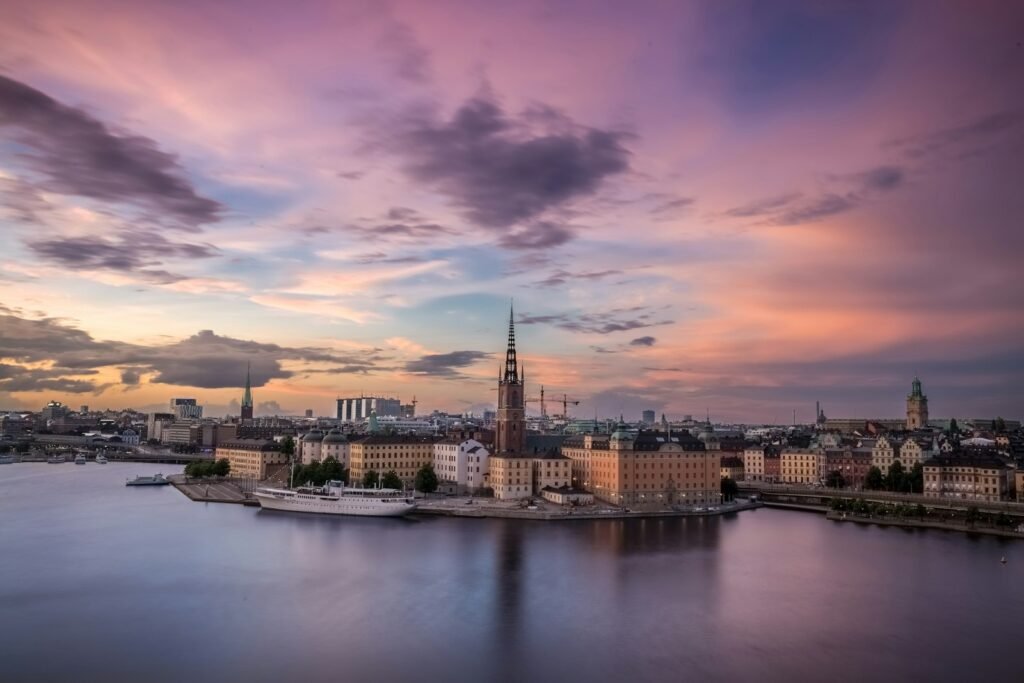
Stockholm is built across fourteen islands, and that is not a piece of trivia — it is the single most useful fact for choosing a hotel. Neighbourhoods here are separated by water, and the bridge or ferry between them shapes how the city feels far more than distance does.
The good news is that the centre is compact and the transport is excellent. The less good news is that Stockholm is expensive, and the difference between neighbourhoods is measured in real money.
The short answer
First visit with limited time: Norrmalm for transport and hotel choice, or Gamla Stan if you want to step out of the door into the postcard. Second visit, or if you would rather eat and drink where locals do: Södermalm, comfortably.
- First visit, short stay — Norrmalm
- Postcard Stockholm — Gamla Stan
- Best all-rounder — Södermalm
- Green space, museums, refined — Östermalm
- Value, still central — Vasastan or Kungsholmen
Gamla Stan
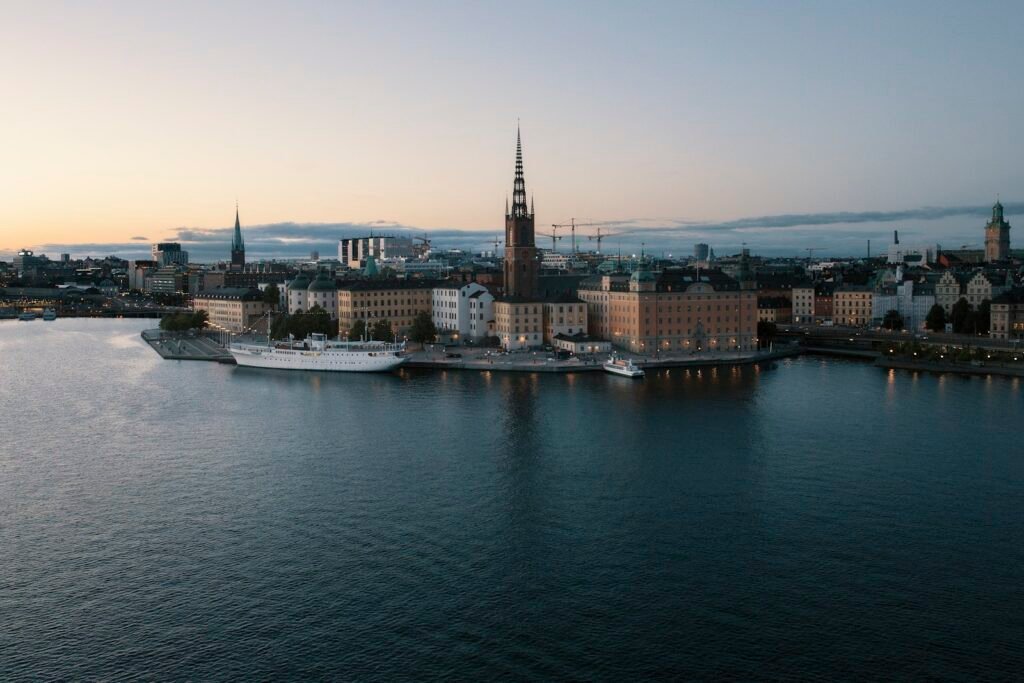
The old town: ochre and rust-coloured townhouses on an island, narrow lanes, the Royal Palace, and Stortorget square. It is genuinely beautiful and it is genuinely small, which means it is dense with visitors from late morning onward.
Staying here works if atmosphere is the priority and you accept the compromises. Rooms in the historic buildings are often small and awkwardly shaped, restaurants skew towards tourist pricing, and it is quiet at night mainly because few people live there.
Everything else in the city is a short walk or one metro stop away, so the location is not a problem.
Norrmalm
Modern downtown, and the practical choice. Central Station sits here, which means every metro line, the bus terminal, and the Arlanda Express to the airport in about 20 minutes. The widest hotel selection in the city is in these blocks.
It is not charming. It is department stores, offices and 1960s redevelopment. But for a two-night trip, or if you are arriving late and leaving early, the convenience is worth more than the character you give up — and Gamla Stan is a ten-minute walk south.
Södermalm
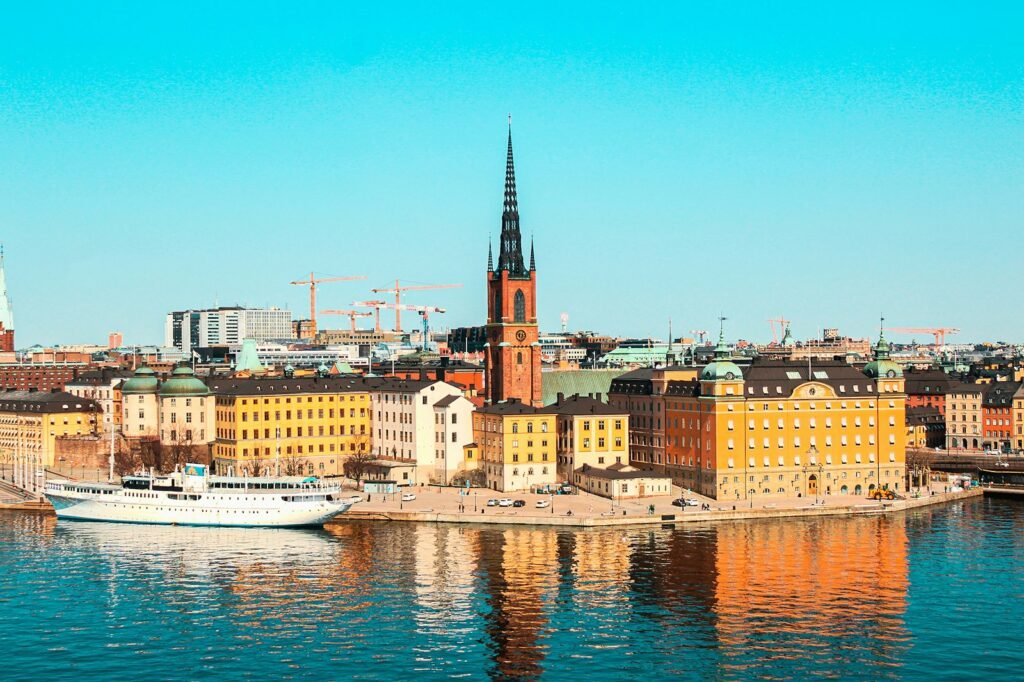
The island south of the old town, and the answer for most people staying more than two nights. It sits on a hill, so the northern edge has the best views in Stockholm — Monteliusvägen looks straight across at Gamla Stan and Lake Mälaren.
Södermalm is where the independent cafés, second-hand shops, small restaurants and most of the interesting nightlife are. It is also cheaper than Gamla Stan and Östermalm for equivalent rooms, and it is a 15-minute walk or two metro stops to the centre.
Stay here if: you want a neighbourhood rather than a hotel district.
Östermalm
The affluent east: wide boulevards, fine dining, designer shops, and the Östermalms Saluhall food market. It borders Djurgården, the parkland island with the Vasa Museum, Skansen and the ABBA Museum — which is where most of Stockholm’s must-see attractions actually are.
Expect to pay for it. Östermalm suits couples, families wanting green space, and anyone whose itinerary is museum-heavy.
Vasastan and Kungsholmen
The two value picks, both residential and both within easy reach of the centre. Vasastan sits north of Norrmalm and has a good local restaurant scene without the mark-up. Kungsholmen is west, on its own island, with a waterside path around the edge that is one of the nicest walks in the city.
Both put you 10 to 20 minutes from the centre by metro or on foot, at rates noticeably below Gamla Stan.
What it costs
Stockholm is expensive, though less punishingly so than its reputation suggests. Hostel dorms run roughly 250–400 SEK a night. Solid three-star chains — Scandic, Elite, Best Western Plus — sit around 1,500–2,200 SEK.
Peak summer, June to August, adds roughly 20 to 40 per cent. November to March, Christmas aside, cuts 15 to 30 per cent. Staying in Södermalm or Kungsholmen rather than Gamla Stan is the simplest saving available.
One local quirk worth knowing: Stockholm is effectively cashless. Cards work everywhere, and some places will not take cash at all.
Getting around
The T-bana metro is clean, punctual and easy, and several stations are decorated well enough to be an attraction in themselves. An SL travelcard covers metro, bus and the commuter ferries.
Those ferries matter: the route to Djurgården is public transport, not a tour, and it is included on the travelcard. It is also the most pleasant way to reach the museums.
The Arlanda Express reaches the airport in 20 minutes but is costly; the airport coaches take about 45 minutes for considerably less.
Frequently asked questions
How many days do you need in Stockholm?
Three. One for Gamla Stan and the palace, one for Djurgården and the Vasa Museum, one for Södermalm and a boat into the archipelago.
Is summer or winter better?
Summer has near-endless daylight and the archipelago at its best. Winter is dark and cold but atmospheric, cheaper, and the Christmas markets are excellent. Avoid November if you can — dark without the snow.
Is Stockholm walkable?
The central islands are, easily. Bring shoes that cope with cobbles and a fair amount of climbing on Södermalm.
Is the archipelago worth a day?
Yes. Vaxholm is about an hour by boat and makes a straightforward half-day. Longer trips reach quieter islands and are the best thing you can do here in summer.
Elsewhere in the region: the Copenhagen travel guide. Watching costs? how to travel Europe on a budget is worth reading first.