
Ho Chi Minh City is still called Saigon by almost everyone who lives there, and it is organised by numbered districts rather than named neighbourhoods. That sounds impersonal and turns out to be useful: once you know what District 1 and District 3 mean, booking becomes straightforward.
The city is also enormous and the traffic is genuinely difficult. A hotel three kilometres from where you want to be can mean thirty minutes in a taxi at the wrong hour, so choosing the right district matters more here than the star rating does.
The short answer
First visit, three to five nights: District 1, around Dong Khoi. Everything you came to see is walkable and the transport links are best. If you want the same convenience with fewer tourists and lower prices, move one district over to District 3.
- First visit, short stay — District 1 (Dong Khoi)
- Backpackers and nightlife — Bui Vien, District 1
- Local feel, better value — District 3
- Longer stays, remote work — Thao Dien or Binh Thanh
- Light sleepers — anywhere except Bui Vien
District 1
The centre, and where almost everything on a first itinerary sits: the Reunification Palace, Notre-Dame Cathedral, the Central Post Office, the War Remnants Museum and Ben Thanh Market. It has the highest concentration of hotels at every price point and the best restaurant range in the city.
Within District 1 the distinction that matters is Dong Khoi versus Bui Vien. Dong Khoi is the old colonial spine — wide streets, smart hotels, rooftop bars, generally calm at night. Bui Vien is backpacker street, and it is loud in a way that is difficult to overstate: competing sound systems, bars open past 2am, and the noise carrying into every room facing the street.
Bui Vien is genuinely fun and genuinely cheap. Just book it deliberately rather than by accident, and bring earplugs.
District 3
Directly adjacent to District 1 — about 2.5km, ten minutes outside rush hour — and noticeably more local. Leafier streets, French colonial villas, neighbourhood coffee shops, and street food aimed at residents rather than visitors.
You give up a little walkability to the main sights and get better prices and a more genuine sense of the city. For a second visit, or a stay of more than a few days, it is the better choice.
Thao Dien (District 2)
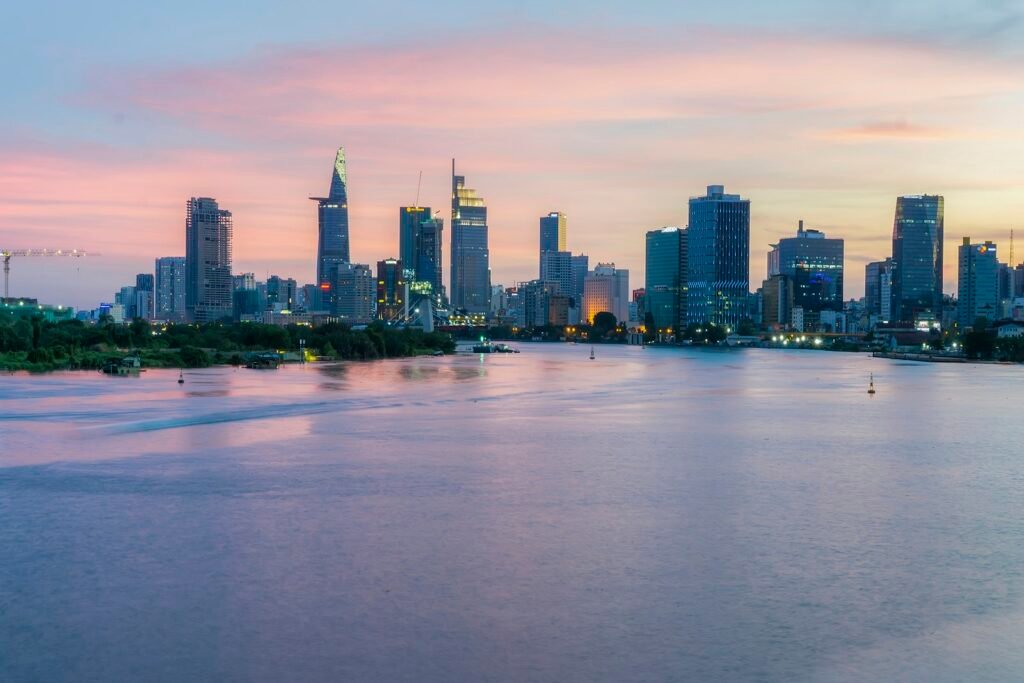
Across the Saigon River, and effectively the expat quarter — international schools, brunch places, craft beer, galleries and boutiques. It is leafy, quiet and comfortable, and it feels the least like Vietnam of anywhere on this list.
The distance is the issue: expect around 30 minutes to District 1 by taxi, and considerably more in traffic. It makes sense for a stay of a week or more, or if you are working remotely and want calm. It makes very little sense for a three-night trip.
Binh Thanh
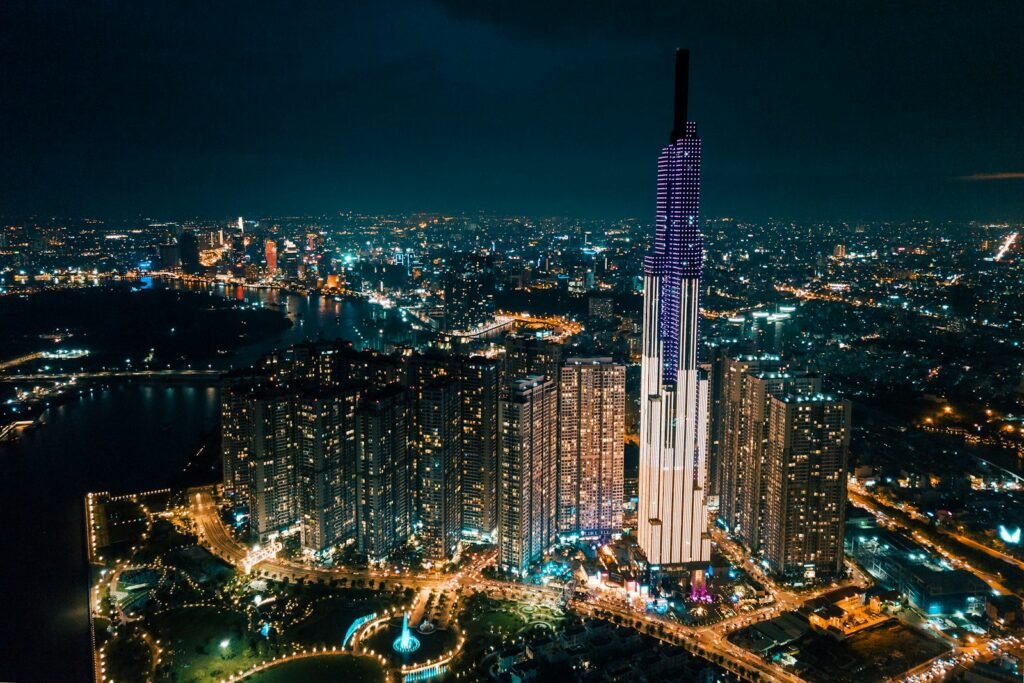
Between District 1 and Thao Dien, and an underrated compromise. You get lower rates than District 1, a local neighbourhood atmosphere, and a short hop into the centre. The Landmark 81 tower is here, along with the city’s best observation deck.
What it costs
Saigon is inexpensive by almost any standard, which is why the district choice is more about experience than budget.
- Hostel dorm, Bui Vien area — roughly $4–10
- Budget private room, District 1 — $10–30
- Three-star average — around $43
- Mid-range with a pool, District 1 — $35–90
- Four-star average — around $85
The practical implication: the gap between a cramped budget room and a comfortable mid-range hotel with a rooftop pool is often $30 a night. In Saigon that upgrade is usually worth taking.
Getting around
Use Grab — the regional rideshare app — for both cars and motorbike taxis. Fares are fixed in the app, which removes the haggling, and a motorbike ride across town costs very little and is faster than a car in traffic.
The first metro line opened in late 2024, running from Ben Thanh in District 1 towards Thao Dien, and it has made the eastern districts considerably more practical than they used to be.
Crossing the road deserves a mention. The technique is to walk slowly and predictably into the traffic and let the motorbikes flow around you. Stopping suddenly or running is what causes problems.
Frequently asked questions
How many days do you need?
Two full days covers the central sights. Add a third for the Cu Chi Tunnels or a Mekong Delta day trip, both of which leave from District 1.
Is Ho Chi Minh City safe?
Broadly yes. Violent crime against visitors is rare; bag-snatching from passing motorbikes is the real risk. Keep your phone away from the kerb and your bag on the inside shoulder.
Saigon or Hanoi?
Saigon is bigger, hotter, faster and more commercial. Hanoi is older and more atmospheric. Most itineraries include both, connected by a short flight or the long train.
When should I go?
December to April is the dry season and the most comfortable. The wet season brings heavy but usually short afternoon downpours rather than all-day rain.
More of the country: the Vietnam travel guide and the most interesting places in Vietnam. Budgeting the wider trip? how to travel Southeast Asia on a budget.