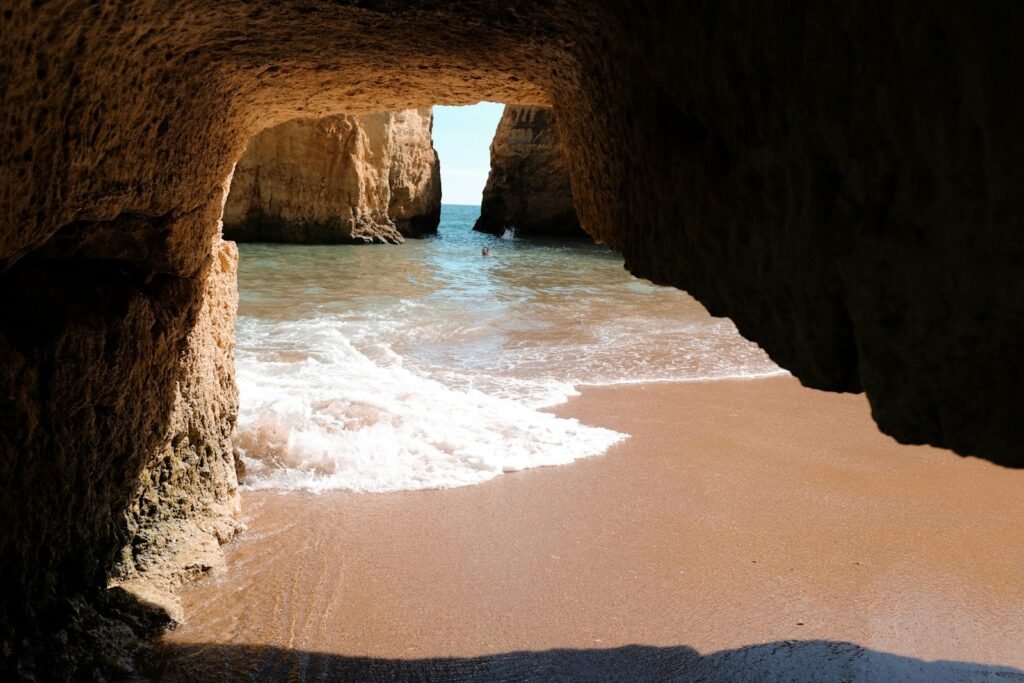
Lagos is the Algarve town that manages to be a proper place as well as a resort. It has a walled old town with genuine history, the best cluster of beaches on the coast within walking or short-drive distance, and a nightlife scene that has a reputation — deserved — for being louder than the rest of the region.
That last point is why where you stay matters here. Lagos is compact, but the difference between a street in the old town and a hotel out at Meia Praia is the difference between two quite different holidays.
The short answer
Stay in or immediately around the old town if you want to walk to dinner. Stay at Meia Praia if you want a beach holiday with a balcony. Stay near Praia Dona Ana if the cliffs and coves are what you came for and you do not mind a walk into town.
- First visit, no car — Old Town
- Families and long beach days — Meia Praia
- Best beaches on the doorstep — Dona Ana / Ponta da Piedade
- Quiet, with a car — Praia da Luz or Alvor
- Light sleepers in August — not the old town centre
The Old Town
The historic centre sits behind the town walls, a short bridge from the marina. It is the most practical base by a distance: restaurants, bars, shops, the market and the bus and train stations are all within a few minutes on foot, and you can eat and drink without thinking about transport at all.
The beaches are the trade-off. Batata and Estudantes are small coves right by the centre, pleasant but crowded. The famous ones need a walk or a short drive.
The other trade-off is noise. Lagos has an established bar scene concentrated in a few old-town streets, and in July and August it runs late. Ask which street a property is on before booking, and read reviews written in summer rather than April.
The Marina and Avenida dos Descobrimentos
Along the water opposite the marina is an underrated compromise. You are a five-minute walk over the bridge from the old town, a short walk from Meia Praia, and next to the train station — useful if you are moving on to Faro or Lisbon.
It is quieter than the old town at night, and the properties tend to be larger and slightly better value than equivalents inside the walls.
Meia Praia
Meia Praia is the long one — four kilometres of open sand running east from the marina, the antithesis of the enclosed cove beaches Lagos is known for. It is where the larger family hotels and apartment complexes are.
Expect a 10 to 20 minute journey into the centre depending where along the strip you are. That is fine with a car or a bike, less fun on foot after dinner with tired children. The pay-off is space: even in August you can walk far enough along Meia Praia to find room.
Stay here if: beach time is the holiday and you want a pool and a supermarket rather than a nightly restaurant hunt.
Dona Ana and Ponta da Piedade
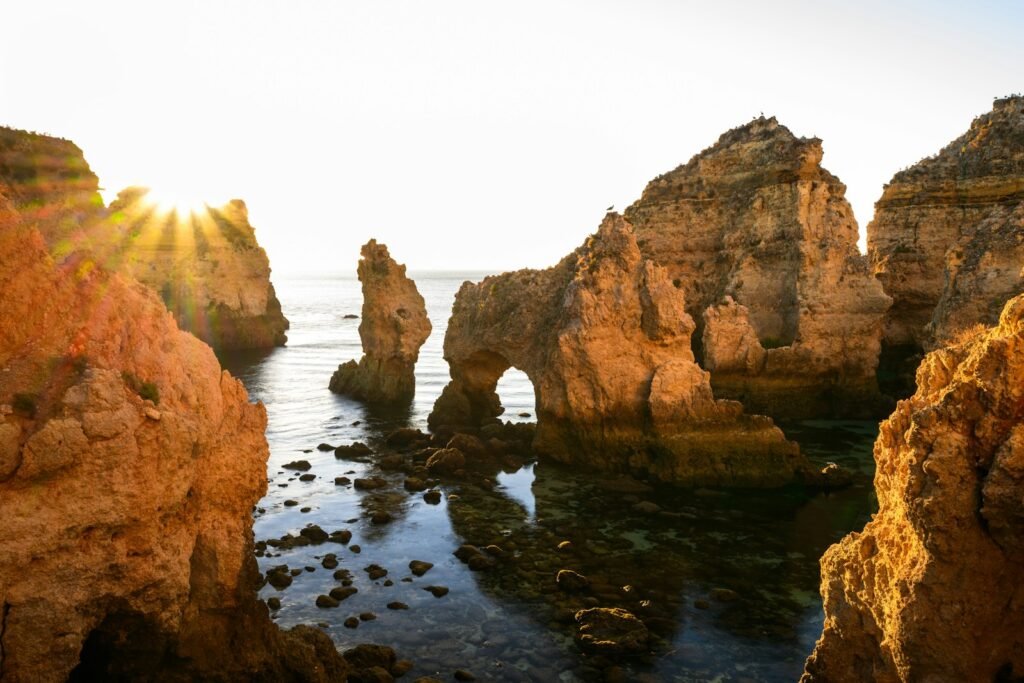
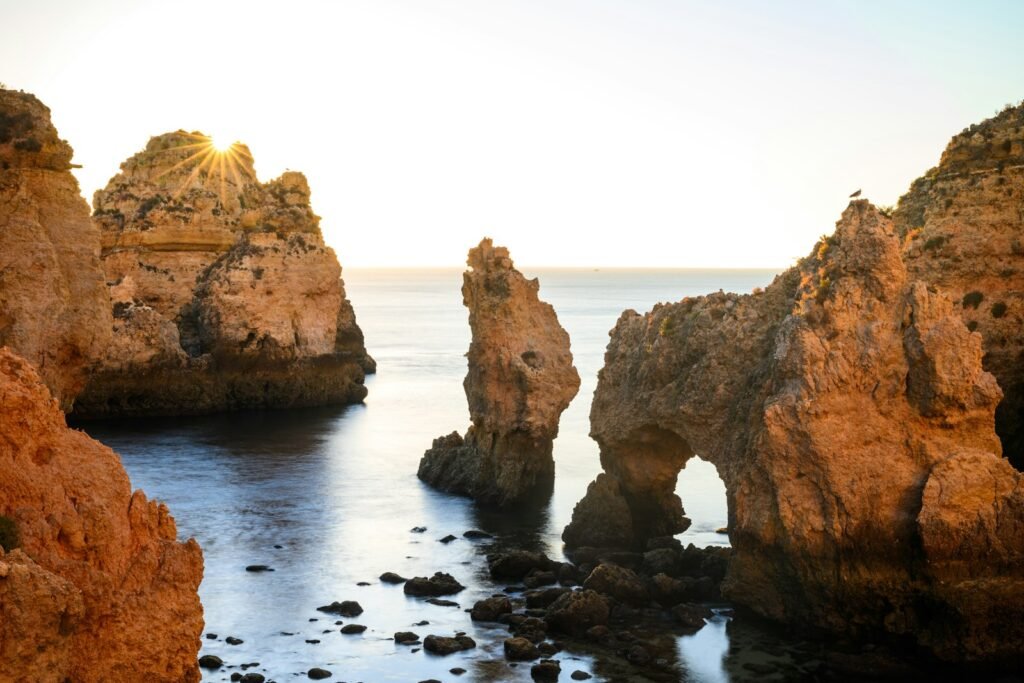
South of the town, the coast turns into the ochre cliffs and sea stacks that sell the Algarve. Praia Dona Ana and Praia do Camilo are the two famous coves, and Ponta da Piedade is the headland where the boat tours go.
Staying here puts the best scenery on your doorstep. It is roughly a 20 to 30 minute walk into town, mostly uphill on the way back, which sounds trivial and is not after a long day.
Stay here if: you will spend mornings on the coastal path and are content to drive or taxi for dinner.
Praia da Luz and Alvor
Both are separate villages rather than Lagos neighbourhoods, and both suit people who want the coast without the town. Luz is about 10 minutes west, small and quiet, popular with families and older visitors. Alvor is a fishing village east of Lagos with a boardwalk over the estuary and a livelier centre than Luz.
Either works well with a car and poorly without one.
What it costs
The Algarve swings hard by season, more than most of Portugal. August is roughly double the shoulder season for the same room, and the best-value properties sell out months ahead.
Broadly, expect hostels and simple guesthouses from around €40–70, mid-range hotels and apartments €90–160, and the better beachfront and boutique properties from €180 upward — with August pushing all of these considerably higher. May, June, September and October are the sweet spot for weather against price.
Getting there and around
Faro is the airport, around an hour by car or roughly 90 minutes by train. The train runs from Faro through Portimão to Lagos, which is the eastern terminus of the Algarve line, so it is straightforward without a car.
In Lagos itself you can walk almost everywhere in the centre. A car is useful for the beaches west towards Sagres and for Praia da Luz or Alvor, but it is genuinely optional if you base yourself in the old town or by the marina.
Frequently asked questions
Is Lagos good for families?
Yes, particularly around Meia Praia where the sand is open and the hotels are set up for it. The old town in August is less suited to early bedtimes.
How many days do you need?
Four or five is comfortable — two for the beaches, one for a boat trip to the Ponta da Piedade caves, one for a day trip to Sagres or Cape St Vincent.
Which is the best beach?
Praia do Camilo for the setting, Dona Ana for the swim, Meia Praia for space. Camilo involves a long wooden staircase down and, inevitably, back up.
Is Lagos just a party town?
No, though it has that reputation from a few streets in high summer. Outside July and August it is a quiet, attractive Portuguese town with exceptional coastline.
Elsewhere in the country: the most interesting places in Portugal and the Lisbon travel guide. On a budget? the best places to visit in Europe on a budget covers the wider picture.